
java history

Java is an island shaped by time, nature, and human ambition. Long before written records, powerful volcanic forces formed its landscape, creating fertile plains that would later support some of Southeast Asia’s most advanced civilizations. From the earliest human inhabitants to the rise of great kingdoms, Java has always played a central role in the history of the Indonesian archipelago.
This series explores the major chapters of Java’s past, tracing its journey through ancient belief systems, royal dynasties, and profound cultural transformations. You will discover how Hinduism and Buddhism left lasting architectural and spiritual legacies, how Islamic traditions gradually blended with existing customs, and how foreign powers altered the island’s political and social structures.
The story continues through the colonial era, periods of resistance and upheaval, the trauma of war, and the emergence of an independent nation. Each chapter focuses on a distinct historical period, placing events within their wider cultural and geographical context. Together, these chapters form a continuous narrative that reveals how Java’s past still shapes its people, landscapes, and way of life today.

The Geological Origins of Java
Long before humans arrived, Java was shaped by immense geological forces beneath the Earth’s surface. Tectonic plate movements, repeated volcanic eruptions, and powerful river systems gradually formed the island’s mountains, valleys, and fertile plains. Over millions of years, layers of ash and lava created rich soils and dense ecosystems. This chapter explores how fire, water, and stone transformed Java into one of Southeast Asia’s most dynamic and life-supporting islands.

The First Inhabitants of Java
Long before written history, Java was already home to some of the earliest human populations in Southeast Asia.
Drawn by fertile land, abundant water, and a rich natural environment, early humans settled along rivers and volcanic plains. Their presence on the island forms one of the oldest chapters of human history outside Africa.
This chapter explores who these first inhabitants were, where they came from, and how Java shaped their survival and way of life.
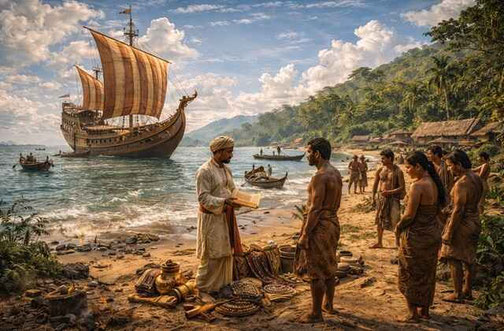
Early Kingdoms and Hindu-Buddhist Influence
Long before the rise of Islamic sultanates or European powers, Java was shaped by powerful kingdoms rooted in Hindu and Buddhist traditions. Influenced by Indian trade networks and belief systems, early rulers transformed the island into a center of religion, art, and political authority. This chapter explores how Hinduism and Buddhism reached Java, how early kingdoms emerged, and how these beliefs became deeply woven into Java’s cultural foundation.
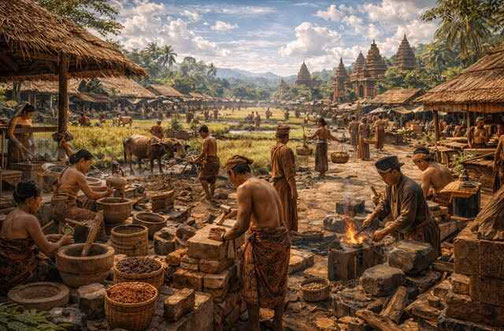
The Majapahit Period
Java’s Golden Age
Between the 13th and 15th centuries, Java entered one of the most remarkable periods in its history. Under the rule of the Majapahit Empire, the island became the political, cultural, and economic center of much of Southeast Asia. Powerful rulers, advanced administration, and a flourishing blend of Hindu-Buddhist traditions shaped an era that would later be remembered as Java’s golden age.

The Rise of Islam on Java
Trade, Faith, and Transformation
From the 13th century onward, Java experienced a profound cultural and spiritual transformation with the arrival of Islam. Introduced peacefully through trade, scholarship, and local adaptation, Islam gradually reshaped Javanese society without erasing its older traditions. This chapter tells how merchants, mystics, and rulers laid the foundations of an Islamic Java—one that blended new beliefs with deeply rooted local culture.
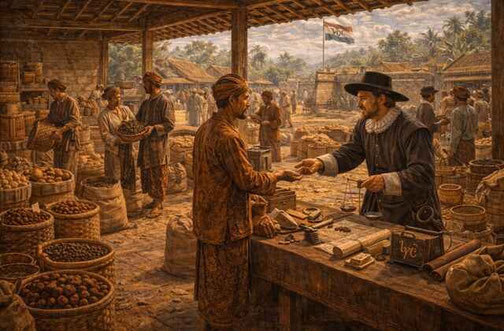
European Arrival and the VOC on Java
The arrival of Europeans on Java marked a decisive turning point in the island’s history. What began as trade soon evolved into political influence and military intervention. Through the Dutch East India Company (VOC), European powers reshaped regional alliances, controlled strategic ports, and altered the balance of power among Javanese rulers. This chapter explores how commerce, diplomacy, and force intertwined during the early European presence on Java.
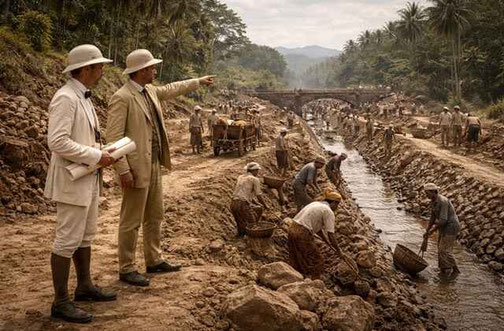
Java under Dutch Colonial Rule
For more than three centuries, Dutch colonial rule shaped Java in profound ways. This period brought political domination and economic control, but also lasting changes in administration, infrastructure, education, and social structure. Life under colonial rule was complex and uneven, marked by both hardship and opportunity. Understanding this era requires looking beyond simple opposites, to see how colonial power and Javanese society interacted, adapted, and evolved together.

Resistance, Unrest, and the Rise of Nationalism in Java
As colonial control over Java expanded, resistance emerged in many forms. From armed uprisings led by local leaders to intellectual movements demanding reform, opposition to foreign rule gradually reshaped political consciousness on the island. This chapter explores the major conflicts, social tensions, and early nationalist ideas that developed on Java during the 19th and early 20th centuries, laying the groundwork for Indonesia’s struggle for independence.
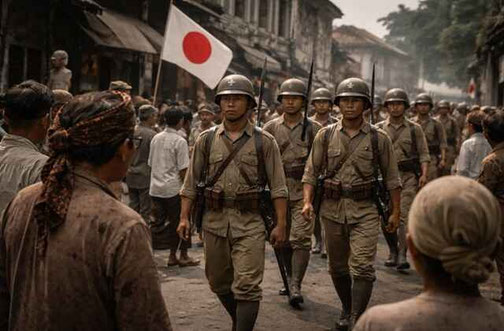
World War II and the Japanese Occupation of Java
World War II transformed Java forever. Japanese occupation ended Dutch rule, brought widespread suffering, and accelerated nationalist awareness.
This chapter examines life under Japanese control, civilian internment, the British role after 1945, and how international pressure forced the end of colonial authority.
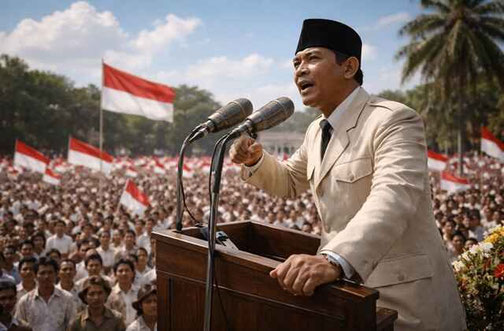
Independent Java: From Sukarno to the Present
After centuries of foreign rule and years of violent upheaval, Java entered a new era as part of an independent Indonesia. The decades that followed independence were marked by high ideals, political experimentation, rapid change, and recurring challenges. From the charismatic leadership of Soekarno to the emergence of modern urban Java, this chapter traces how the island transformed itself — and how its past continues to shape its future.