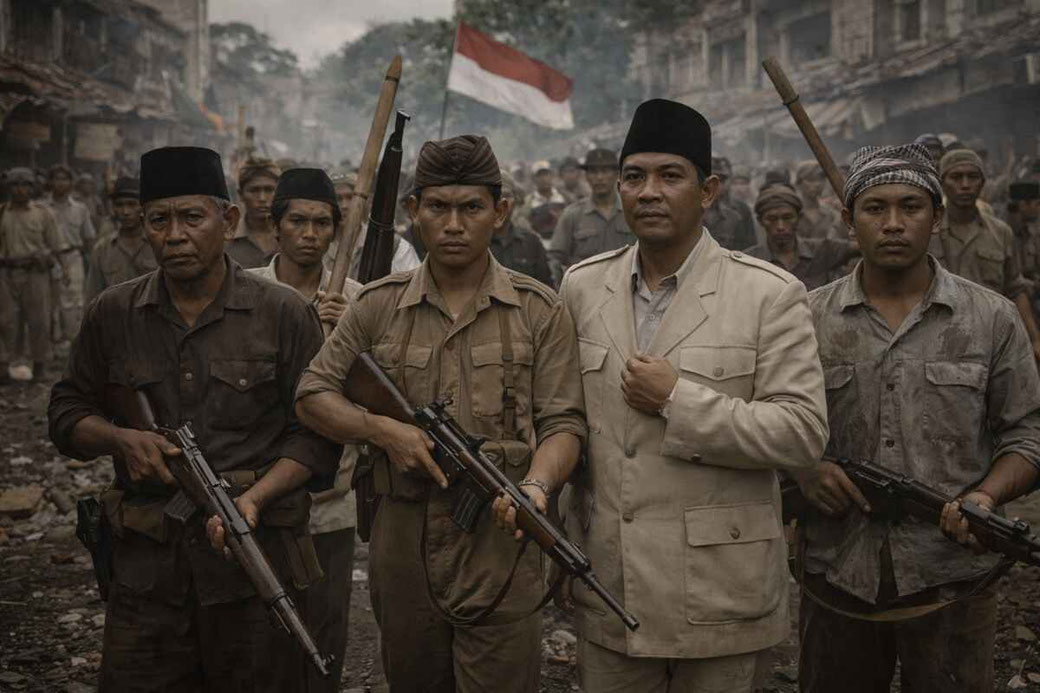
World War II and the Japanese Occupation of Java
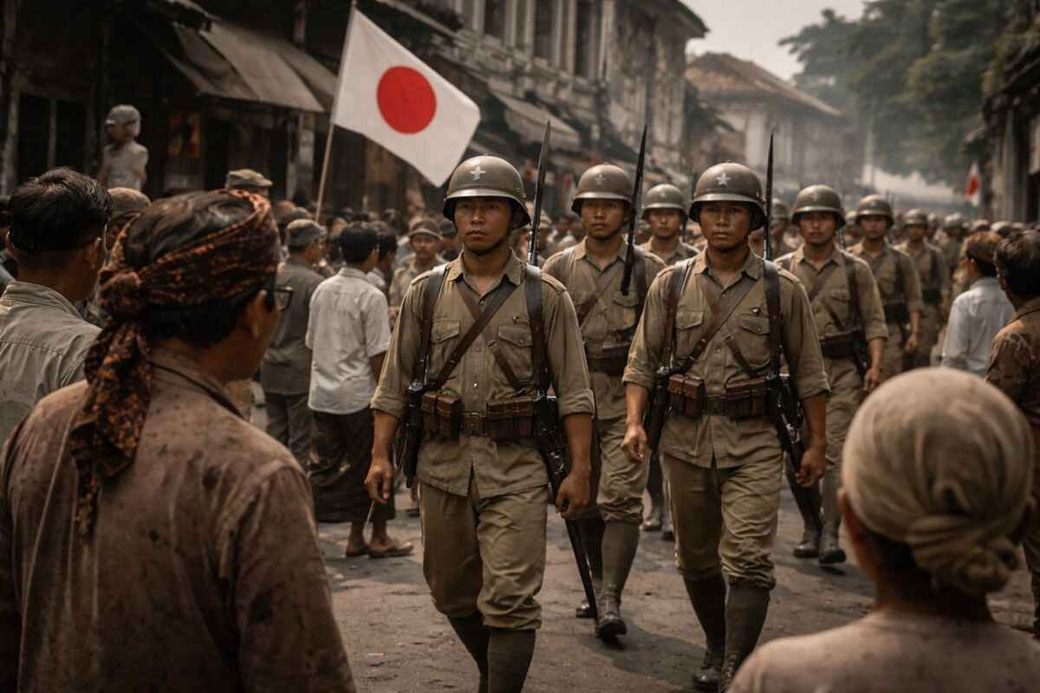
The Collapse of Dutch Rule
In early 1942, Japanese forces invaded the Dutch East Indies with remarkable speed. Poorly prepared for modern warfare and isolated from reinforcements, Dutch colonial authorities were unable to resist effectively. Within weeks, Java — the administrative heart of the colony — fell into Japanese hands.
For many Indonesians, the sudden collapse of Dutch power was shocking. A colonial system that had seemed permanent vanished almost overnight. Japanese forces presented themselves as liberators of Asia from Western imperialism, though this narrative would soon prove hollow.

Life Under Japanese Occupation
Japanese rule over Java was harsh and authoritarian. Civil administration was replaced by military control, and daily life became increasingly difficult. Food shortages worsened as resources were redirected toward Japan’s war effort. Forced labor became widespread, with thousands of Javanese men sent to work on military projects across Southeast Asia.
Known as romusha, these laborers endured brutal conditions, inadequate food, and high mortality rates. At the same time, censorship was strict, political freedoms disappeared, and public obedience was enforced through fear.
Internment and Civilian Suffering
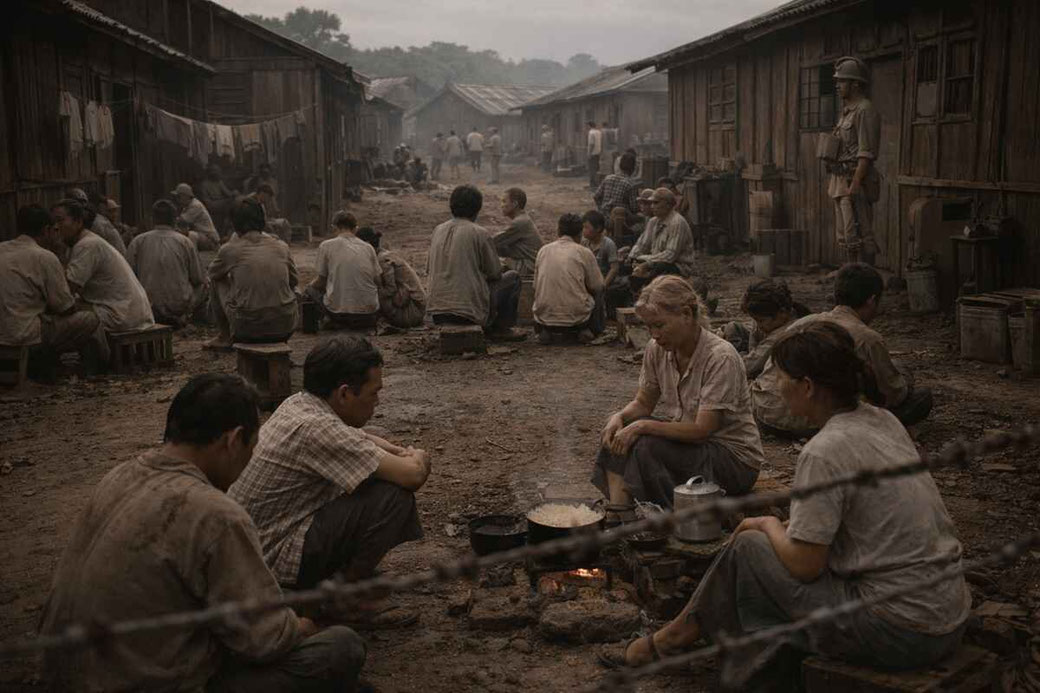
European civilians, including Dutch men, women, and children, were rounded up and placed in internment camps. Conditions inside these camps were harsh, with overcrowding, disease, and malnutrition common.
Indonesian civilians were not spared suffering either. Although some initially cooperated with the Japanese administration, the realities of occupation quickly became clear. The promise of Asian solidarity gave way to exploitation, coercion, and violence.
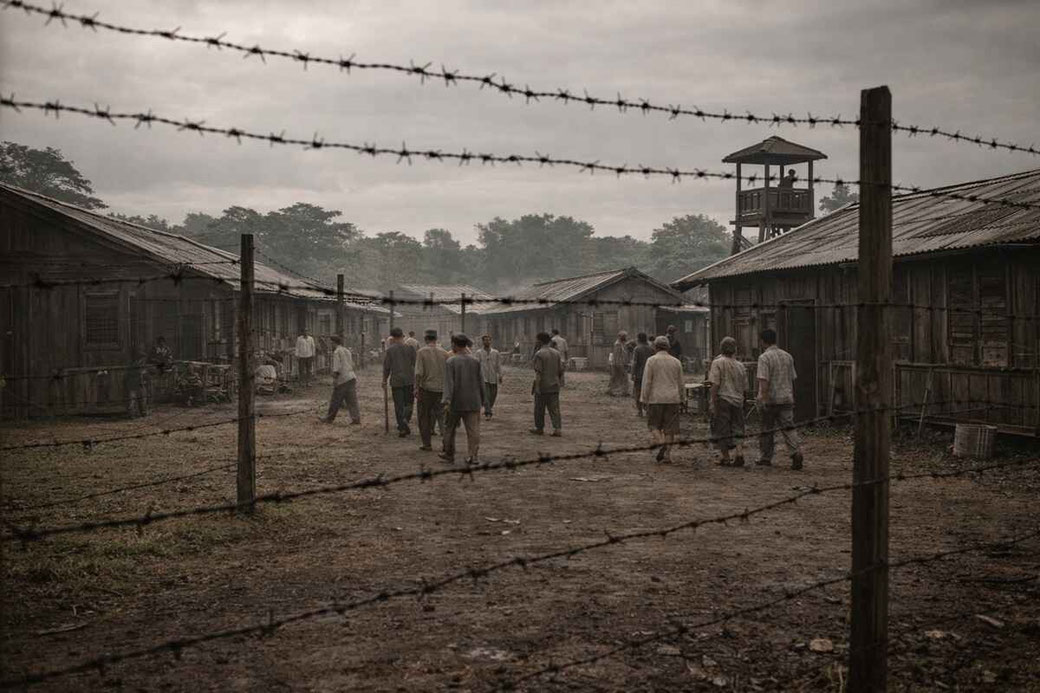
Nationalism Under Japanese Rule
Paradoxically, Japanese occupation also created conditions that strengthened Indonesian nationalism. Dutch political restrictions were lifted, and Indonesian leaders were allowed — under strict supervision — to organize mass movements and local administrations.
Figures who would later shape Indonesia’s future gained experience in leadership, organization, and mass mobilization. The Japanese trained and armed local militias, unintentionally preparing Indonesians for the struggle that would follow the war.
Japan’s Defeat and the Power Vacuum
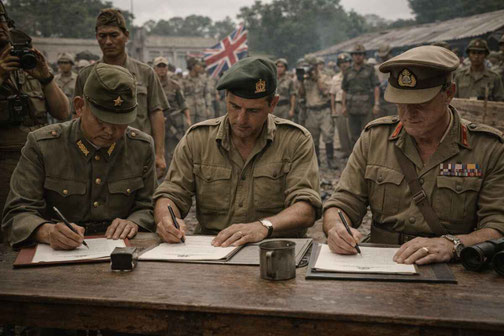
In August 1945, Japan surrendered after the atomic bombings of Hiroshima and Nagasaki. On Java, Japanese authority collapsed almost instantly. However, no clear replacement government was ready to take control.
This sudden vacuum created chaos but also opportunity. Indonesian leaders moved quickly to proclaim independence, while Japanese forces were ordered to maintain order until Allied troops arrived.

The British Role After 1945
British forces, acting on behalf of the Allies, arrived in parts of Java later in 1945. Their role was not to re-establish colonial rule, but to oversee the disarmament of Japanese troops and manage the transfer of authority.
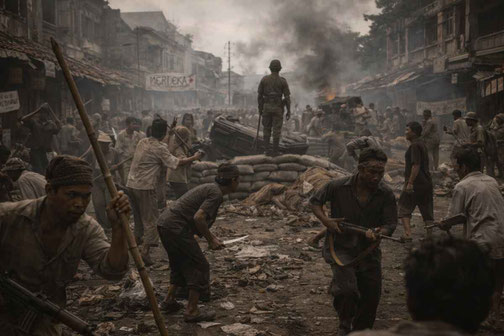
The most dramatic confrontation occurred in Surabaya, where tensions between Indonesian nationalists and Allied forces erupted into violent conflict in November 1945. Although British troops were involved, their presence was temporary and politically constrained.
International Pressure and the End of Empire
After the war, global political realities had changed. The Netherlands sought to regain control over its former colony, but faced increasing international opposition. The United States, emerging as a dominant global power, exerted diplomatic and economic pressure on the Dutch government.
American support for post-war reconstruction in Europe became increasingly tied to decolonization. Under mounting international scrutiny and pressure, the Netherlands was forced to accept that colonial rule could no longer be maintained.
A Defining Turning Point
World War II permanently altered Java’s place in the world. The Japanese occupation shattered the myth of European invincibility, accelerated nationalist consciousness, and exposed the fragility of colonial systems.
Although the years of occupation brought immense suffering, they also set irreversible changes in motion. Java would never again return to the pre-war colonial order. The path toward independence, once unthinkable, had become unavoidable.