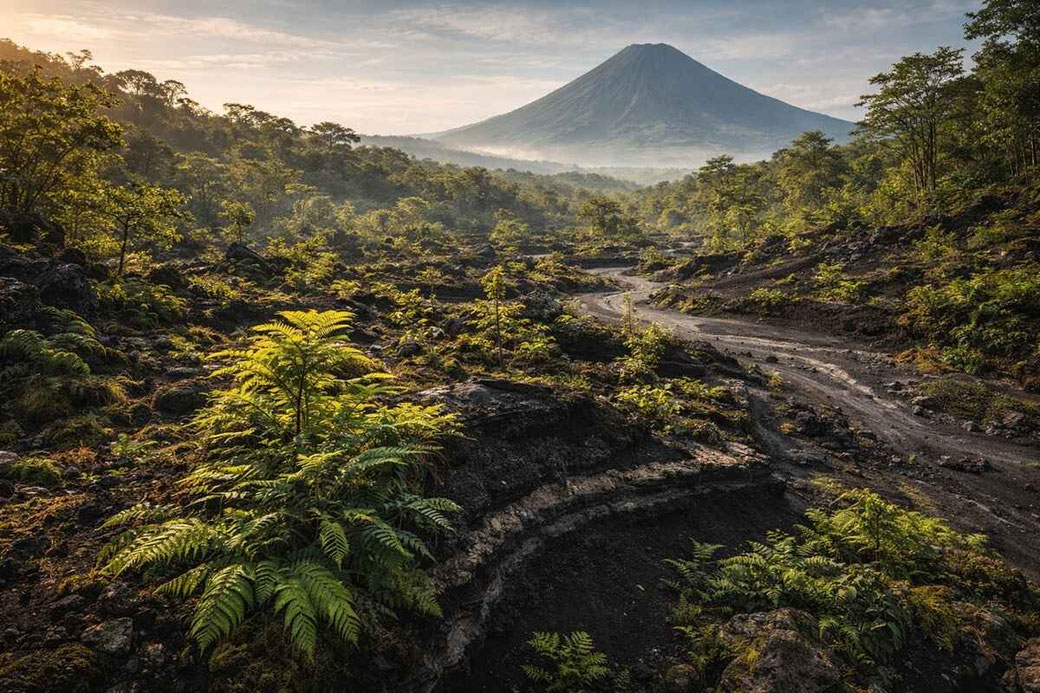
geological origins of java
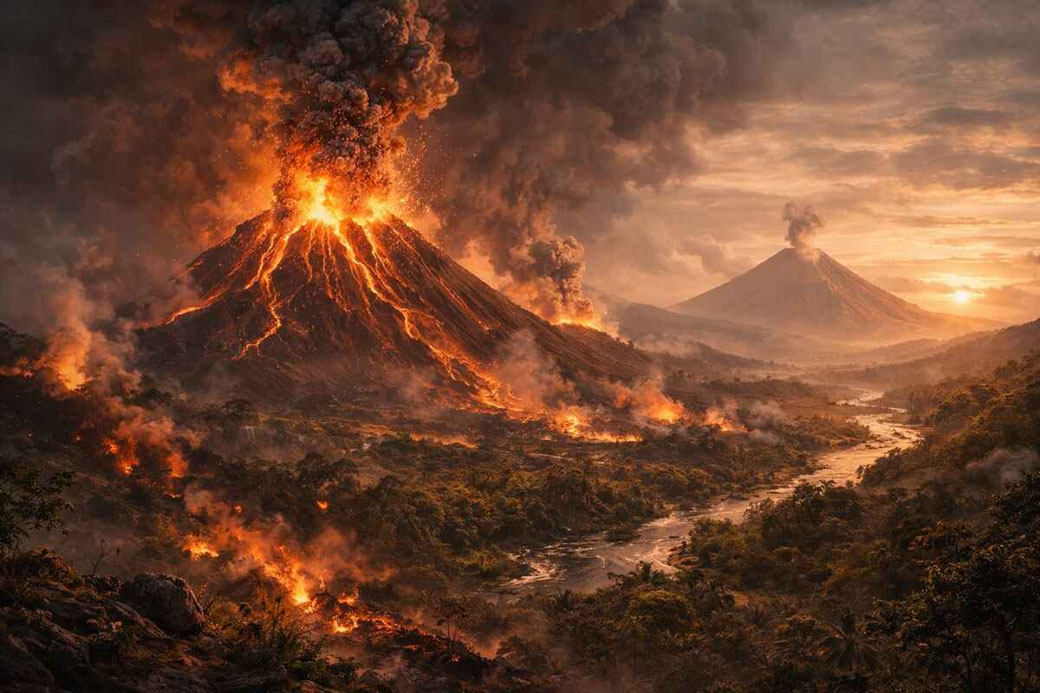
Long before kingdoms rose, religions arrived, or people set foot on its shores, Java was already shaped by immense natural forces. The island’s history begins deep beneath the Earth’s surface, where tectonic plates collided, volcanoes emerged, and fertile landscapes slowly took form.
Understanding how Java was created is essential to understanding everything that followed. Its dramatic geology did not merely shape the land — it determined where life could flourish, how rivers formed, and why this island would one day become the beating heart of the Indonesian archipelago.
Tectonic Forces and the Birth of Java
Java owes its existence to one of the most powerful geological processes on Earth: plate tectonics. The island lies along the boundary where the Indo-Australian Plate moves northward and slides beneath the Eurasian Plate. This slow but relentless subduction began tens of millions of years ago and continues today.
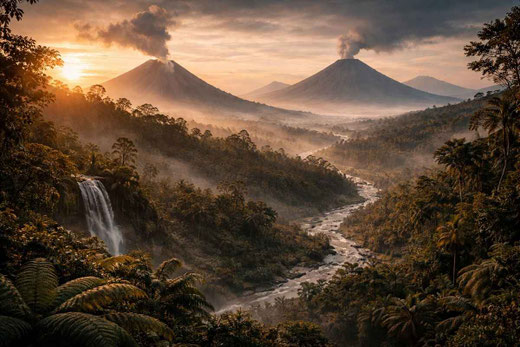
As the oceanic plate descended into the Earth’s mantle, intense heat and pressure caused rock to melt and rise back toward the surface. Over vast stretches of time, this process created a chain of volcanoes that would eventually break through the sea, forming the backbone of what we now know as Java.
Unlike islands formed by coral or sediment alone, Java is fundamentally volcanic. Its mountains, valleys, and plains are the direct result of repeated cycles of uplift, eruption, collapse, and renewal. The island did not emerge all at once but grew gradually, shaped by countless geological events that layered new land upon the old.
The Ring of Fire and Constant Renewal
Java is part of the Pacific “Ring of Fire,” a zone known for intense seismic and volcanic activity. This positioning made the island both unstable and extraordinarily fertile. Over time, more than a hundred volcanoes formed across Java, many of which remain active today.
Eruptions were often violent, covering large areas with ash, lava, and rock. While destructive in the short term, these eruptions enriched the soil with minerals, creating some of the most fertile land on Earth. Layer by layer, volcanic ash settled into the landscape, transforming barren rock into rich agricultural ground.
This cycle of destruction and renewal became a defining feature of Java. Entire landscapes could be reshaped in a single eruption, only to regenerate over decades into lush valleys and plains. It is this paradox — danger paired with abundance — that has characterized Java since its earliest days.

Rivers, Valleys, and the Shaping of the Land
As Java rose from the sea, rainwater carved its surface into valleys and river systems. The island’s mountainous spine forced clouds upward, creating heavy rainfall that fed countless rivers flowing north and south.
These rivers carried volcanic sediments from the highlands to the lowlands, depositing fertile material across broad plains. Over geological time, this process smoothed sharp volcanic terrain into rolling landscapes and wide floodplains.
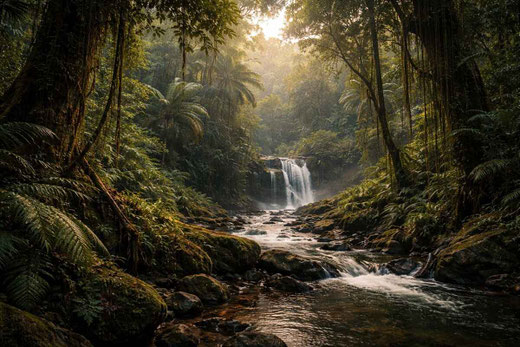
The interaction between mountains and water defined Java’s physical structure:
- Steep volcanic highlands in the interior
- Fertile plains along the northern coast
- Deep valleys and river systems connecting both
- Even before human presence, these natural corridors shaped how life would later move across the island.
- Climate and the Rise of Ancient Ecosystems
Java’s position near the equator gave it a warm, humid climate from an early stage in its formation. Combined with abundant rainfall and mineral-rich soils, this environment supported dense forests and diverse ecosystems.
Tropical rainforests covered much of the island, while mangroves and wetlands formed along its coastlines. These ecosystems stabilized the land, preventing erosion and helping rivers maintain their courses. Over time, complex food chains developed, supported by the island’s constant supply of water and nutrients.
This balance between geology and climate made Java unusually hospitable compared to many other volcanic islands. Where some remained harsh and barren, Java quickly became green, stable, and capable of sustaining large populations of flora and fauna.
A Landscape in Motion
Despite its apparent stability, Java has never been geologically quiet. Earthquakes, eruptions, and land shifts have continued throughout its history. Coastlines advanced and retreated, mountains grew and collapsed, and rivers changed course.
These ongoing processes ensured that Java was never static. The island evolved continuously, reshaping itself long before any human narrative began. This dynamic nature would later influence settlement patterns, agriculture, and even belief systems, as future inhabitants learned to live alongside powerful natural forces.
The Foundation of Everything That Followed
By the time humans would eventually arrive on Java, the island was already uniquely prepared to support life. Fertile soils, abundant water, and diverse ecosystems were not accidents of history — they were the direct result of millions of years of geological transformation.
Java’s geology created opportunity, but also demanded adaptation. Volcanoes offered fertility but required respect. Rivers provided life but could also destroy. This delicate balance between generosity and danger would become a defining theme throughout Java’s long human history.
The story of Java does not begin with people, kingdoms, or trade. It begins with fire, water, and stone — forces that shaped an island capable of sustaining one of the world’s most enduring civilizations.