The Majapahit Period:
Java’s Golden Age

The Rise of the Majapahit Empire
The emergence of Majapahit in the late 13th century marked a turning point in Javanese history. After the decline of earlier kingdoms such as Singhasari, Java entered a period of political uncertainty. It was during this time that a new power arose in eastern Java, laying the foundations for what would become the most influential empire the island had ever known.
Majapahit was founded in 1293, following a complex series of alliances, rebellions, and strategic decisions. Rather than relying solely on military force, its early leaders used diplomacy, marriage alliances, and careful administration to consolidate power. This approach allowed the empire to grow steadily, absorbing rival regions without constant warfare.

The Rise of the Majapahit Empire
The emergence of Majapahit in the late 13th century marked a turning point in Javanese history. After the decline of earlier kingdoms such as Singhasari, Java entered a period of political uncertainty.
It was during this time that a new power arose in eastern Java, laying the foundations for what would become the most influential empire the island had ever known.
Majapahit was founded in 1293, following a complex series of alliances, rebellions, and strategic decisions. Rather than relying solely on military force, its early leaders used diplomacy, marriage alliances, and careful administration to consolidate power. This approach allowed the empire to grow steadily, absorbing rival regions without constant warfare.
A Vast Maritime Empire
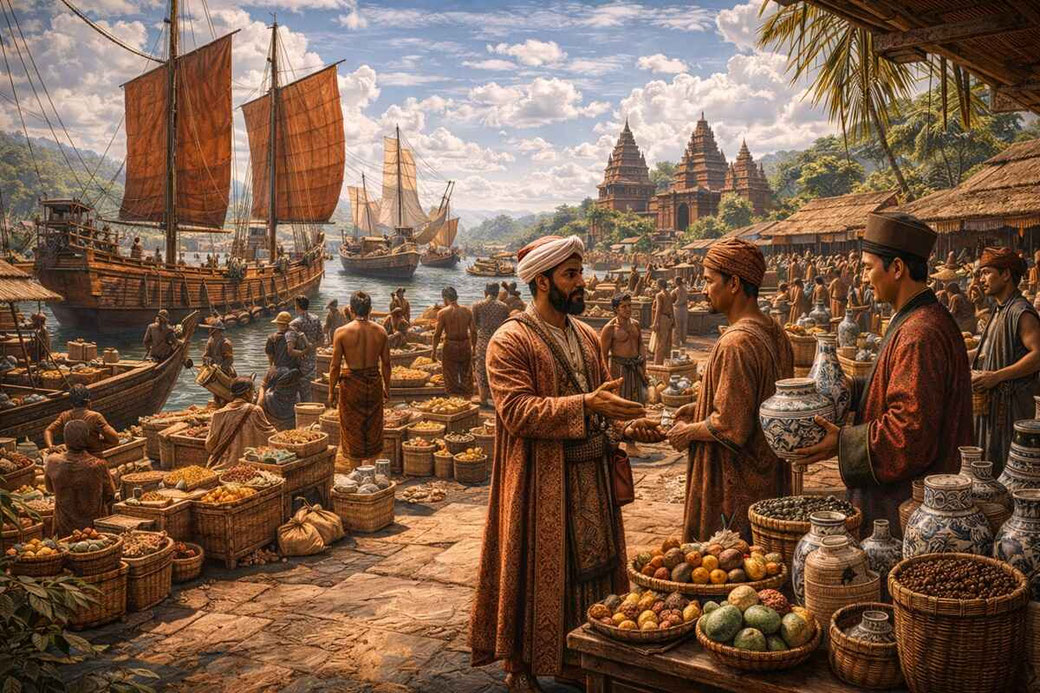
Unlike earlier Javanese kingdoms that focused mainly on land-based rule, Majapahit developed into a true maritime empire. From its heartland in eastern Java, its influence spread across the Indonesian archipelago and beyond. Trade routes connected Java with Sumatra, Borneo, Sulawesi, the Malay Peninsula, and distant ports in India and China.
Majapahit’s strength lay not in permanent occupation of all these regions, but in a network of tributary states. Local rulers acknowledged Majapahit’s authority, paid tribute, and maintained loyalty, while retaining a degree of autonomy. This flexible system made the empire both powerful and resilient.
Governance and Administration
Majapahit developed one of the most sophisticated systems of governance in pre-modern Southeast Asia. The kingdom was ruled by a central court, supported by officials responsible for taxation, law, irrigation, and trade regulation.
Written records, inscriptions, and literary works suggest a highly structured bureaucracy. Land ownership was carefully recorded, agricultural production monitored, and surplus redistributed to support both the court and public works. This administrative efficiency helped ensure food security and social stability across large areas of Java.
Society and Daily Life
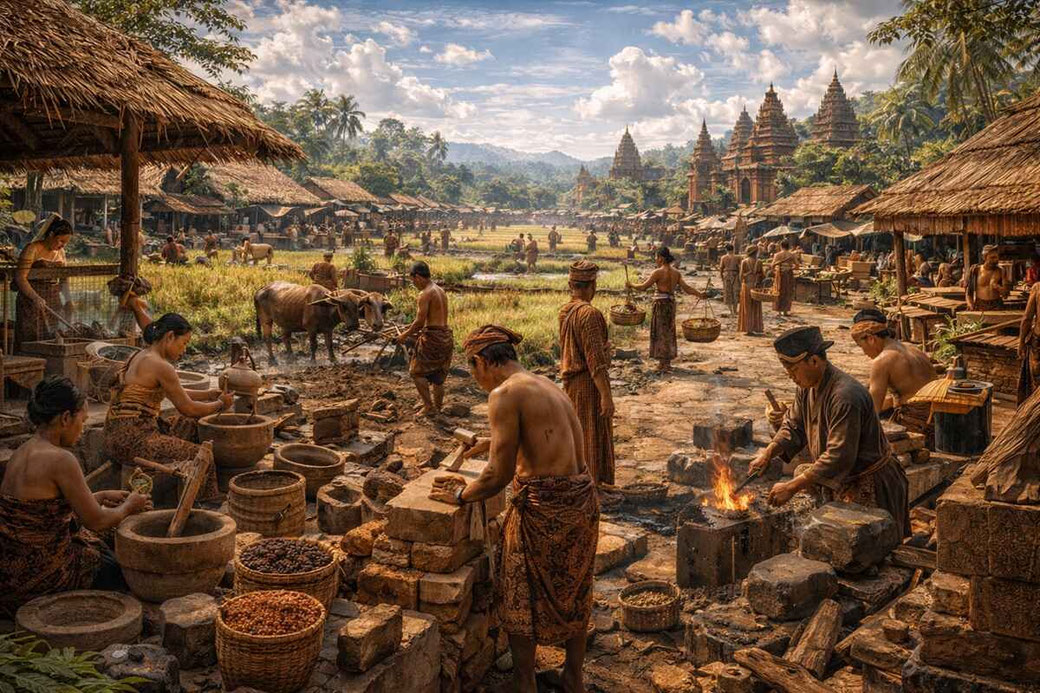
Life in Majapahit-era Java was shaped by agriculture, craftsmanship, and ritual. Rice farming formed the backbone of the economy, supported by advanced irrigation systems that allowed multiple harvests per year. Villages were organized around communal cooperation, with shared responsibilities for water management and land use.
Artisans produced textiles, metalwork, ceramics, and stone carvings of remarkable quality. Markets bustled with activity, offering local goods alongside imported items such as spices, beads, and silk. Social hierarchy was clearly defined, but mobility was possible through service, trade, or religious study.

Hindu-Buddhist Culture and Belief
Religion played a central role in Majapahit society. The empire embraced a syncretic blend of Hinduism and Buddhism, rather than treating them as separate or competing traditions. Deities, rituals, and philosophies from both belief systems coexisted and influenced one another.
Temples were not only places of worship, but also centers of education, art, and political symbolism. Kings were often portrayed as divine or semi-divine figures, linking earthly rule with cosmic order. This spiritual framework reinforced loyalty to the state and legitimized royal authority.
Art, Architecture, and Literature
The Majapahit period produced some of Java’s most enduring artistic achievements. Temples, gates, and palace complexes were constructed using red brick and stone, decorated with intricate reliefs depicting mythology, daily life, and royal ceremonies.
Literature flourished as well. Court poets and scholars wrote epic poems, legal texts, and historical chronicles that preserved both myth and memory. One such work famously described Majapahit’s vast sphere of influence, shaping later ideas of unity across the Indonesian archipelago.
The Height of Power
At its peak in the 14th century, Majapahit dominated much of maritime Southeast Asia. Its court was a center of diplomacy, attracting envoys, traders, and scholars from distant lands. The empire’s influence extended not only through force, but through culture, trade, and shared religious traditions.
This period is often remembered as a time of prosperity, order, and confidence. Java stood at the heart of a connected world, linking the Indian Ocean with East Asia.
Decline and Transformation
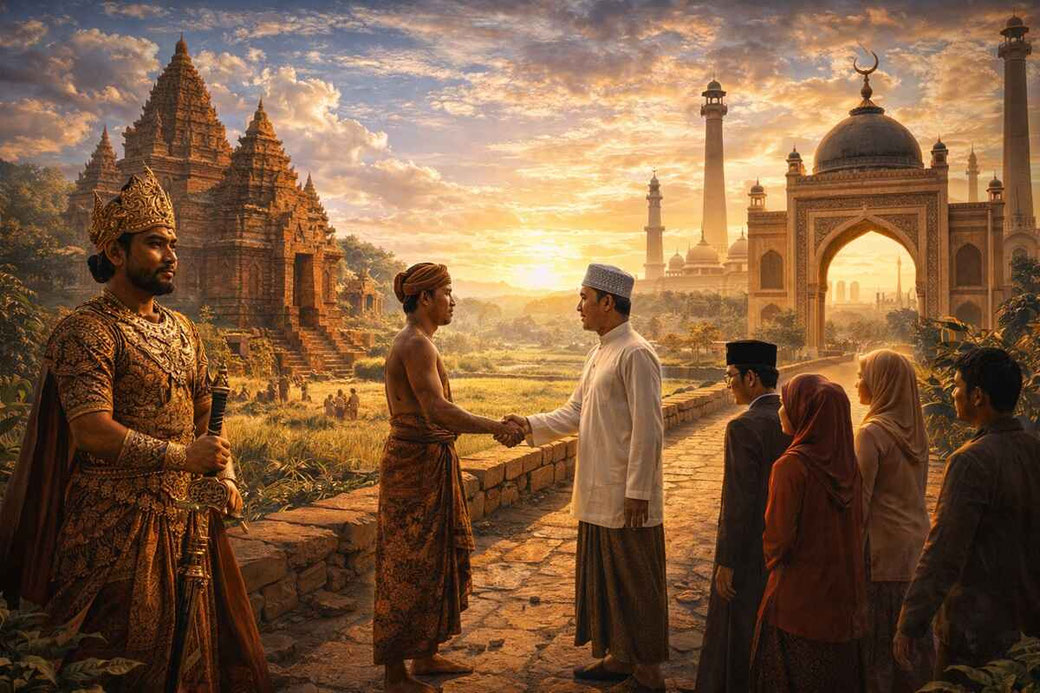
Despite its achievements, Majapahit was not immune to change. Internal power struggles, shifting trade routes, and the gradual spread of Islam across coastal regions weakened the empire’s cohesion. By the late 15th century, its authority had fragmented, and new political centers began to rise.
Rather than disappearing abruptly, Majapahit slowly transformed. Its traditions, administrative concepts, and cultural ideals were absorbed into later Javanese courts and societies.
The Enduring Legacy of Majapahit
Majapahit’s legacy extends far beyond its physical ruins. Concepts of kingship, unity, and cultural identity developed during this period continued to shape Java for centuries. Even today, Majapahit is remembered as a symbol of greatness, balance, and cultural achievement.
For Java, the Majapahit era represents more than a historical kingdom — it embodies an idealized past, a golden age that still influences how history, identity, and power are understood across Indonesia.