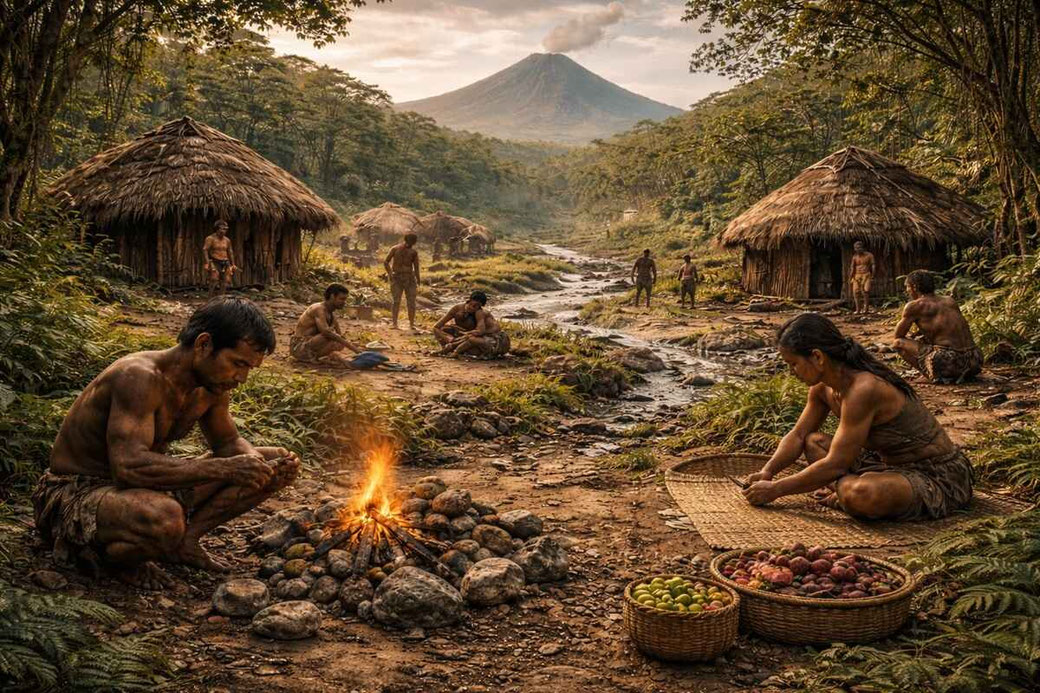
The First Inhabitants of Java
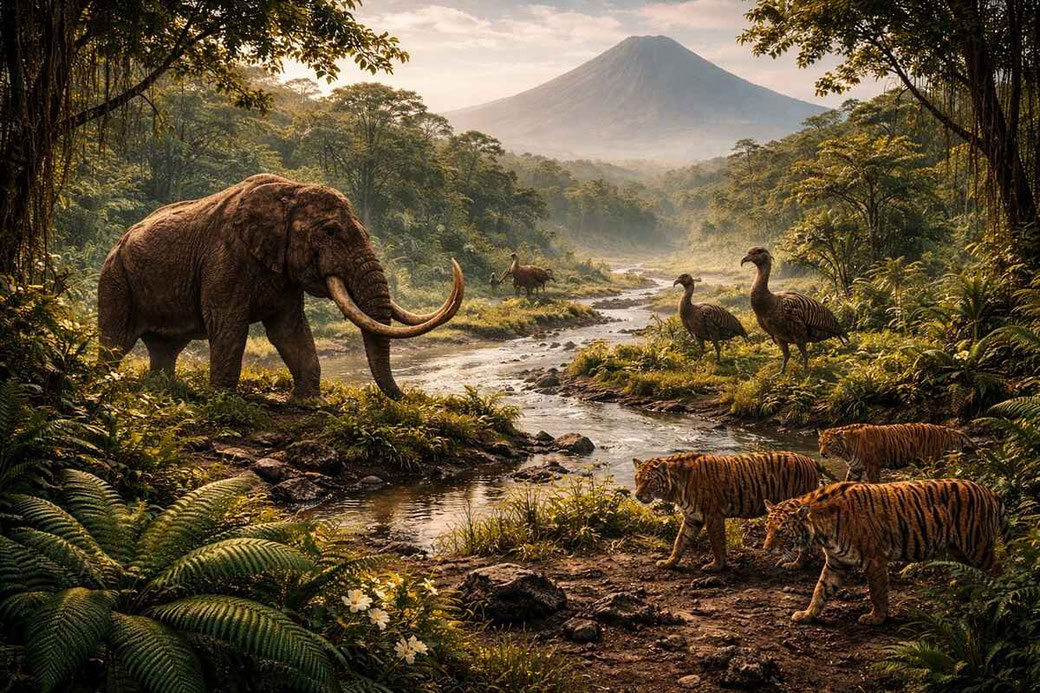
Java Before Modern Humans
When the first humans arrived on Java, the island looked both familiar and wild. Vast forests covered much of the land, intersected by rivers flowing from volcanic highlands to coastal plains. Large animals roamed the landscape, and seasonal changes shaped the availability of food and shelter.
At various times during the Ice Ages, lower sea levels connected Java to the Asian mainland through land bridges. These connections made it possible for early humans and animals to migrate into the region on foot, turning Java into part of a much larger prehistoric world known today as Sundaland.

Early Human Presence on Java
Java is one of the most important places in the world for understanding early human history.
Fossil discoveries on the island revealed evidence of Homo erectus, an early human species that lived long before modern humans appeared.
These early inhabitants lived on Java hundreds of thousands of years ago. They were physically robust, capable of walking long distances, and well adapted to tropical environments.
Their presence on the island demonstrates that early humans were far more mobile and adaptable than once believed.
Life Along Rivers and Volcanoes
The first inhabitants of Java did not settle randomly. They were drawn to river valleys, where fresh water, fish, and fertile soil were readily available. Volcanic landscapes, though dangerous, provided stone for tools and created open areas rich in plant and animal life.
These early humans lived as hunter-gatherers, relying on:
- Wild plants and fruits
- Fish and small animals
- Large mammals when available
Stone tools found on Java suggest simple but effective technologies, suited to cutting, scraping, and processing food. Fire, once mastered, offered protection, warmth, and new ways to prepare meals.

Migration and Survival
Java’s position made it a crossroads of migration. As climates shifted and sea levels changed, human groups moved in and out of the island. Some populations disappeared, while others adapted and survived.
Over long periods, Java experienced cycles of isolation and connection. During times of low sea levels, migration was easier. When seas rose again, populations became isolated, developing unique characteristics shaped by the island environment.
This constant interaction between movement and isolation played a crucial role in shaping early human diversity on Java.

From Early Humans to Modern People
The early inhabitants of Java were not modern humans as we know them today. Over time, they were gradually replaced or absorbed by later waves of human migration. These later groups brought new technologies, languages, and cultural practices, laying the foundation for the societies that would eventually emerge on the island.
Although separated by vast stretches of time, the story of these first inhabitants marks the beginning of humanity’s long relationship with Java — a relationship defined by adaptation, resilience, and coexistence with powerful natural forces.
The Legacy of Java’s First Inhabitants
The presence of early humans on Java highlights the island’s deep importance in global human history. Long before kingdoms, temples, or trade routes, Java was already a place where humans learned to survive, adapt, and thrive in a challenging environment.
This deep past reminds us that Java’s history is not only cultural or political — it is fundamentally human, stretching back hundreds of thousands of years.