
east java touristic destinations
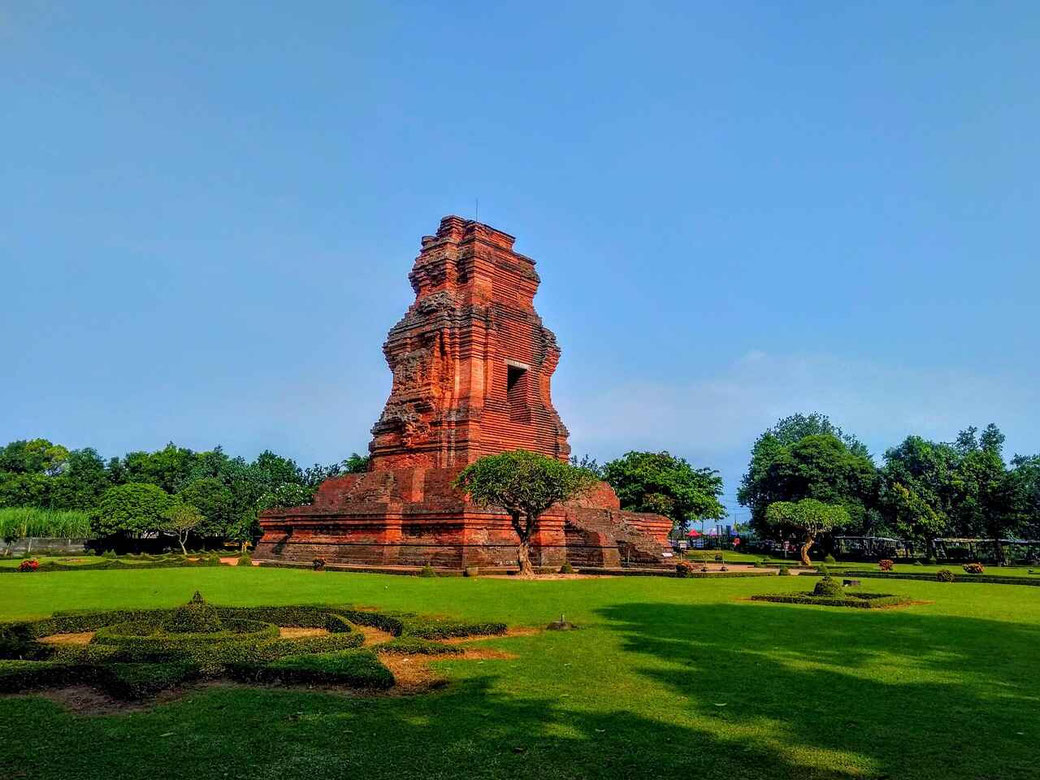
East Java is known for its powerful landscapes—from active volcanoes and vast calderas to lush waterfalls and beautiful coastal areas. The region is home to world-famous natural wonders like Mount Bromo and the Ijen Crater, yet it also offers many hidden treasures waiting to be discovered. Traditional villages, remote beaches, vibrant cities, and protected wildlife parks give East Java a unique character that appeals to every type of traveler. Below you will find a selection of both celebrated landmarks and lesser-known attractions, showcasing the full diversity and adventure that East Java offers.
Mount Bromo
Sunrise Over the Sea of Sand

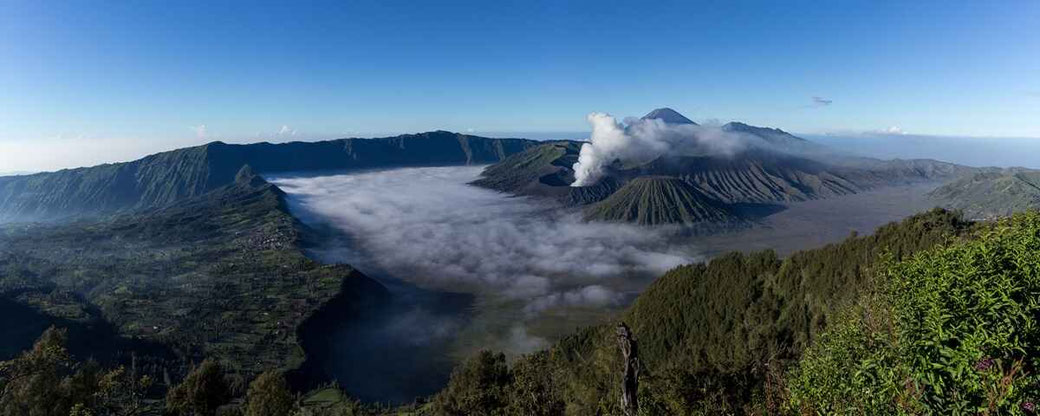
Mount Bromo is undoubtedly East Java’s most iconic landscape — a surreal volcanic desert surrounded by dramatic cliffs, whispering sands, and a volcanic crater that constantly exhales white smoke.
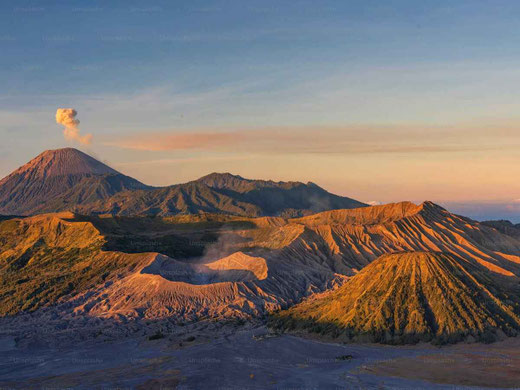
Despite its worldwide fame, Bromo never loses its magic. The experience begins in the early hours before sunrise, when visitors travel by Jeep to one of the viewpoints, usually Penanjakan or King Kong Hill.
As dawn approaches, layers of mist drift across the caldera while the sky transitions from deep blue to purple, orange, and soft pink.
When the sun finally rises, the silhouettes of Mount Bromo, Mount Batok, and the towering Mount Semeru create one of Indonesia’s most breathtaking panoramas.
After sunrise, visitors descend into the caldera, crossing the Sea of Sand to reach the stairs leading to Bromo’s crater rim. The smell of sulfur fills the air, and the sound of rumbling from deep inside the earth is a powerful reminder of Java’s volcanic energy.
Even though Bromo is widely known, each visit feels unique due to the changing light, weather, and atmosphere.
The combination of dramatic scenery, cultural touches (like the Tenggerese community), and the otherworldly environment makes Bromo an unforgettable highlight of East Java.
Baluran National Park
The African Savannah of Java
Located in the far east of the island, Baluran National Park is often nicknamed “Africa van Java” due to its expansive savannah plains, acacia trees, and wildlife such as banteng, deer, peacocks, macaques, and wild buffalo.

The heart of the park is Bekol Savannah, a vast open grassland framed by Mount Baluran and distant volcanic peaks. During the dry season, the landscape turns golden brown, while in the rainy season it transforms into lush green fields.
Visitors can explore the park via quiet roads ideal for wildlife photography. Early morning is the best time to spot animals grazing or gathering near watering holes.
The park also includes mangrove forests, lowland rainforest, and coral-rich coastline.
One of Baluran’s hidden gems is Bama Beach, a quiet stretch of sand where visitors can snorkel in clear water, relax under trees, or enjoy panoramic ocean views without crowds.
Baluran remains relatively unknown to international visitors, making it a perfect destination for those seeking nature in a peaceful, off-the-beaten-path setting.

Ijen Crater
The Blue Fire Phenomenon
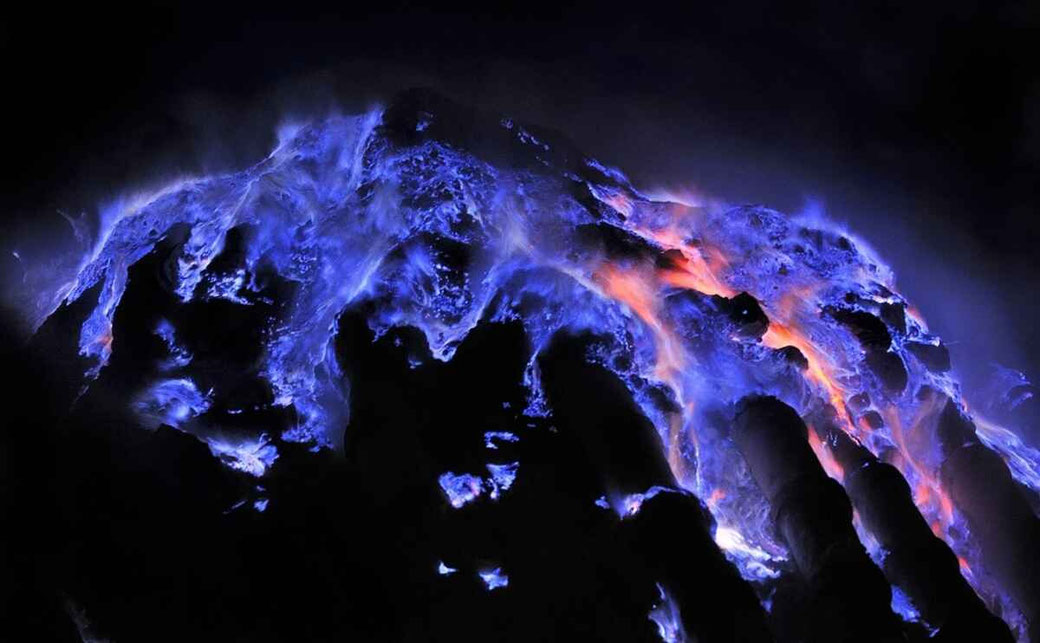
The Ijen volcano is home to one of the rarest natural phenomena in the world: blue flames caused by burning sulfur emerging from cracks deep inside the crater.

This blue fire can only be seen clearly in darkness, which is why hikers begin their journey around midnight, hiking uphill under the stars toward the crater rim.
As they descend into the crater with the help of local guides, the blue flames appear like ghostly rivers of light flowing across the volcanic floor.
When dawn breaks, the scene transforms again entirely. The crater reveals a massive turquoise sulfuric lake — one of the largest of its kind. The surrounding cliffs glow golden as sunlight spreads across the landscape.
Visitors also see the local sulfur miners, who carry heavy loads of solid sulfur up the steep paths, continuing a centuries-old tradition.
Ijen is both beautiful and harsh, making it one of the most striking experiences in East Java. The combination of the blue fire, the toxic sulfur fumes, and the turquoise lake leaves a deep impression on anyone who visits.
Tumpak Sewu Waterfall
The Niagara of Indonesia
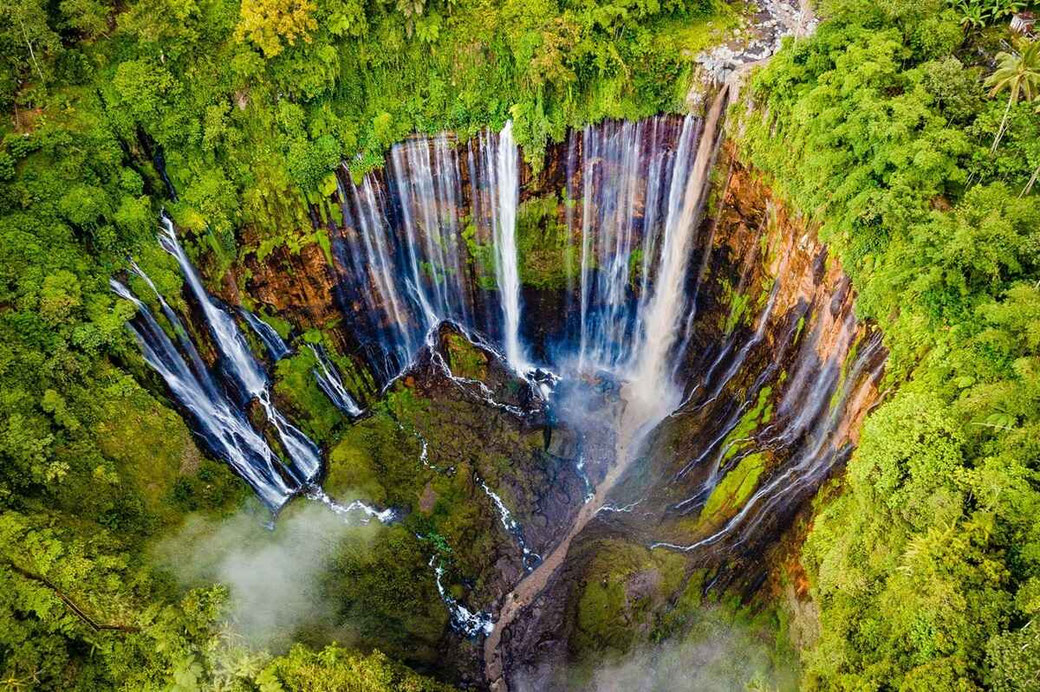
Tumpak Sewu, meaning “A Thousand Waterfalls,” is one of the most dramatic waterfalls in Southeast Asia. The waterfall cascades in a wide semicircle over a steep cliff, with countless thin streams forming a giant curtain of water.

Surrounded by dense jungle and guarded by the imposing Mount Semeru in the background, Tumpak Sewu offers one of the most breathtaking natural panoramas in Indonesia.
Visitors can enjoy the view from above at the cliff viewpoint, but the real adventure begins when descending to the base. The trek involves bamboo ladders, slippery stones, and narrow jungle paths. Once at the bottom, the waterfall towers overhead, filling the air with mist and creating vibrant rainbows on sunny days.
Nearby, additional waterfalls and caves — including Goa Tetes — make the area perfect for a full day of exploration.
While Tumpak Sewu has gained popularity in recent years, it still feels remote and wild compared to more accessible attractions.
Travelers seeking adventure and dramatic landscapes will find this to be a highlight of East Java.
Banyuwangi De Djawatan Forest
The Lord of the Rings Forest
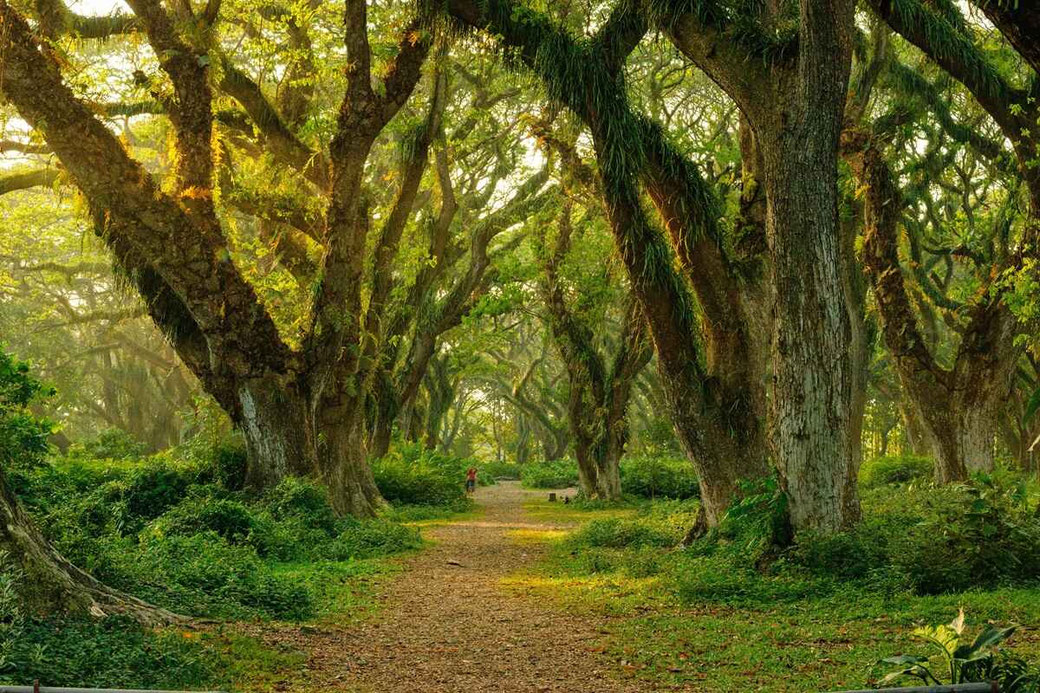

De Djawatan Forest in Banyuwangi is one of East Java’s most enchanting lesser-known attractions.
The forest consists of giant tamarind trees, some over 100 years old, with thick, twisting branches covered in moss and hanging ferns. The result is a mystical landscape that many compare to Fangorn Forest from The Lord of the Rings.
Sunlight filtering through the massive canopies creates a magical, golden atmosphere ideal for photography. The forest is quiet, cool, and peaceful, making it perfect for slow walks, picnics, or simply sitting under the ancient trees to admire their strange, sculptural shapes. Horses and decorative carts occasionally pass through, adding a classic rural charm to the scene.
Although loved by local visitors, De Djawatan remains largely off the radar for most foreign tourists, making it a delightful surprise for those exploring Banyuwangi beyond the usual Ijen route.
Meru Betiri National Park
Remote Rainforest & Wildlife (Banyuwangi / Jember border)
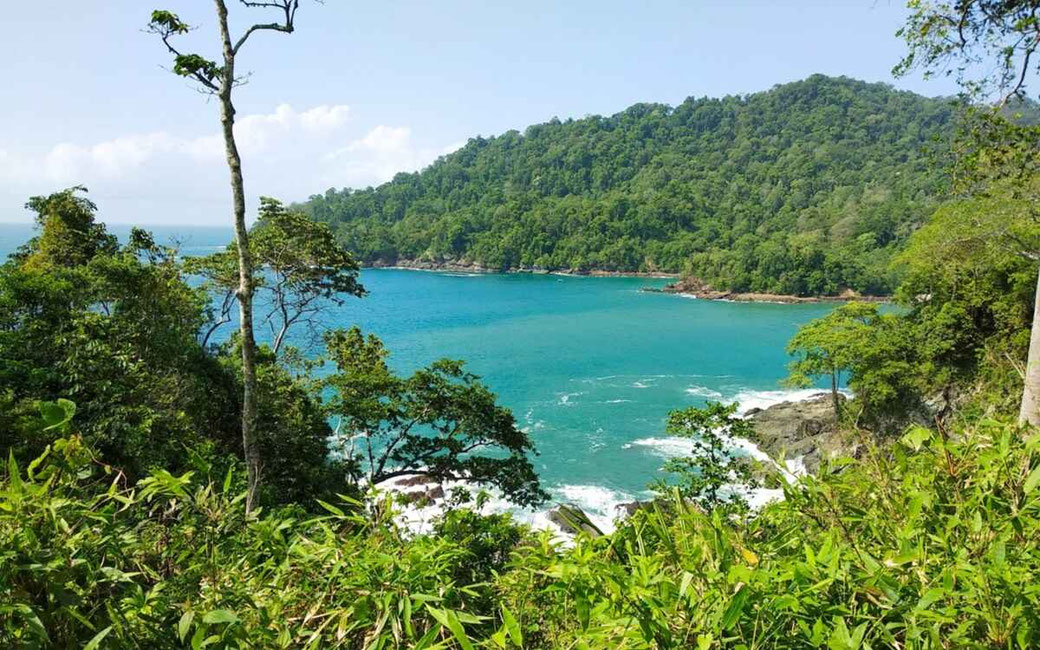
Meru Betiri National Park is one of Java’s wildest and most atmospheric protected areas, stretching along the southern coast between Banyuwangi and Jember. Dense lowland rainforest, coastal savannah, and hidden beaches form a mosaic of habitats that shelter a surprising diversity of species.
Historically famed as one of the last refuges of the Javan tiger in the mid-20th century, the park today is better known for its populations of deer, macaques, monitor lizards, and a splendid variety of birds. Seasonal sea turtle nesting on its quiet beaches adds a powerful conservation story to the landscape.

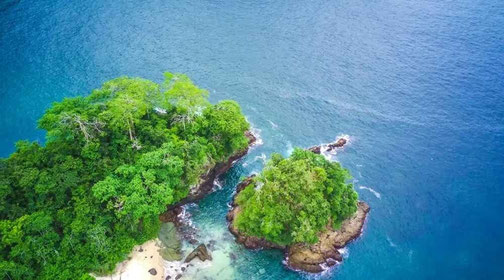
Access is intentionally limited in parts, which preserves the park’s sense of remoteness. Trails thread through humid forests that open onto small clearings and dramatic coastal cliffs. Visitors can combine forest treks with boat trips along the shoreline, explore hidden coves, or relax on broad stretches of sand washed by the Indian Ocean.
For nature lovers who value solitude and raw ecosystems, Meru Betiri feels like stepping into an older Java — one less altered by roads and resorts. The combination of ecological value, dramatic coastal scenery, and a palpable sense of wilderness makes this park a compelling, off-the-beaten-path highlight for East Java.

Goa Gong (Pacitan)
One of Java’s Most Beautiful Caves
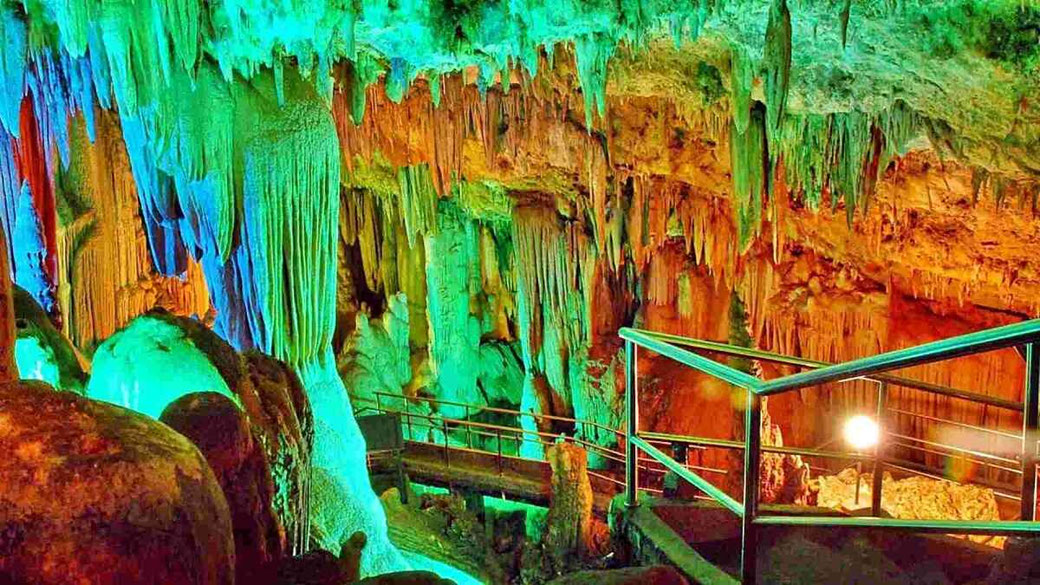
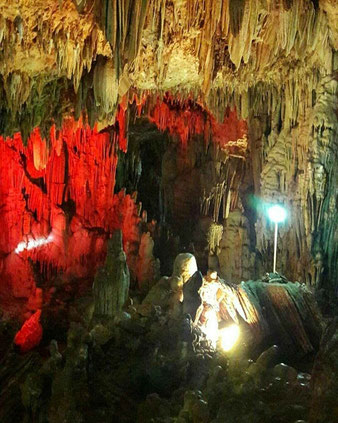
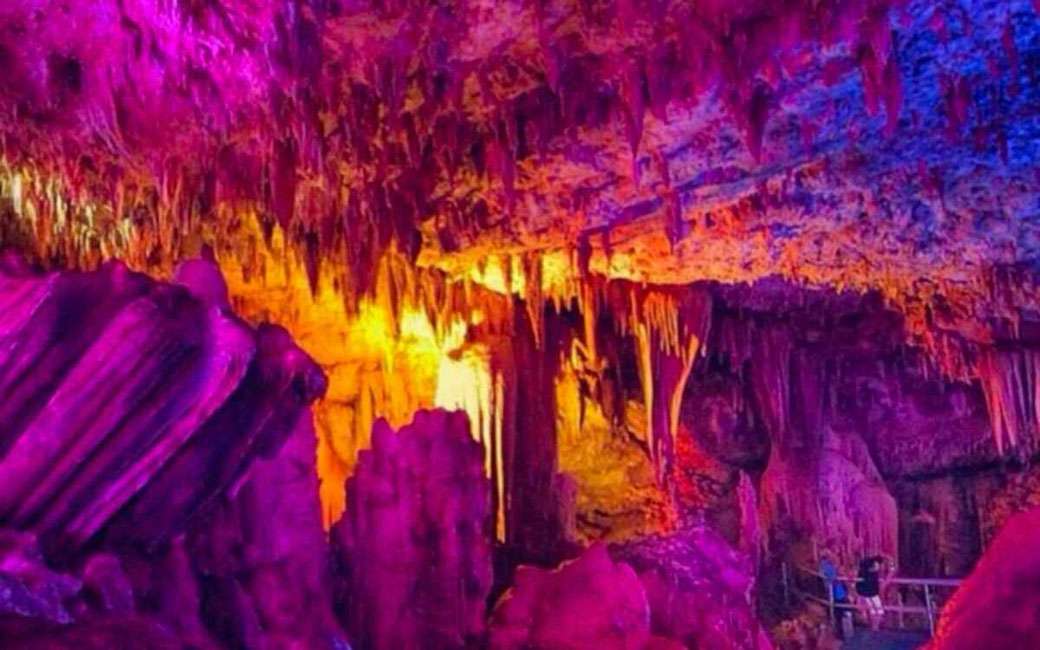
Goa Gong is a remarkable limestone cave tucked into the limestone hills of Pacitan, and it’s widely regarded as one of the most spectacular show caves in Indonesia.
Visitors enter a cool, echoing chamber where dramatic stalactites and stalagmites form complex curtains and columns, lit by carefully placed lamps that emphasize the cave’s textures without overpowering its natural mood.
One of the cave’s signature features is a column that produces a gong-like resonance when tapped — hence the name.
The cave is easily accessible via a short stairway descent and a paved trail, making it a convenient stop for families, photographers, and spelunking newcomers.
Beyond its geological beauty, Goa Gong has a serene atmosphere: the hush of dripping mineral water, the gentle play of light and shadow, and unexpected alcoves that reward slow exploration.
Nearby villages maintain traditional crafts and small eateries, inviting visitors to combine a cultural stop with natural wonder.
Despite its growing reputation among domestic tourists, Goa Gong retains a tranquil quality that feels intimate rather than crowded, making it a delightful and memorable cave experience in East Java.
Sempu Island & Segara Anakan Lagoon
A Hidden Marine Jewel (near Malang)
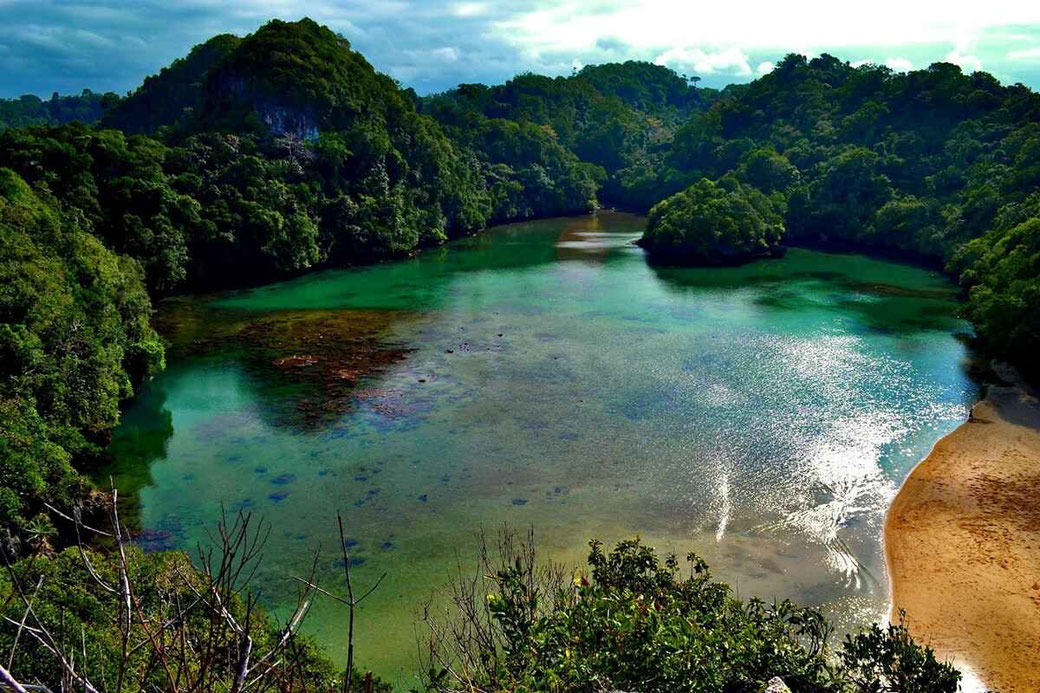
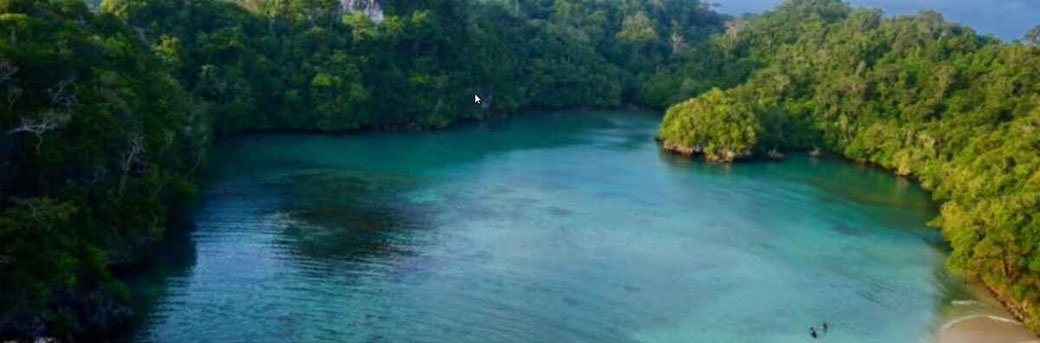
Sempu Island is a protected nature reserve off the southern coast near Malang, famous for its emerald lagoon — Segara Anakan — a rare natural pool carved into the island and filled by tidal flows.
Reaching Sempu requires a short boat ride followed by a coastal hike, a journey that keeps visitor numbers limited and the island’s ecosystems relatively intact. The reward is exceptional: a pristine crescent lagoon framed by high limestone cliffs, white sand, and thick coastal forest.

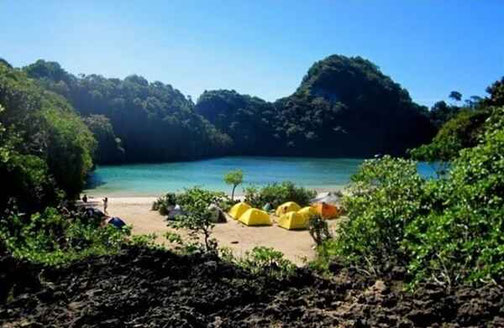
The island’s marine life and coral reefs add significant snorkeling value, while the surrounding beaches provide quiet spots for rest and reflection.
Walking trails through dense vegetation reveal native flora and occasional wildlife, including shore birds and reptiles.
Because Sempu is a protected area, visits are regulated — permits and local guides are usually required — which helps maintain its fragile environment.
For travelers willing to put in the effort, Sempu offers a true wilderness marine experience with dramatic vistas and a sense of discovery rarely found near Java’s busier coastal zones.
Madakaripura Waterfall
A Towering Curtain of Mist (Probolinggo)

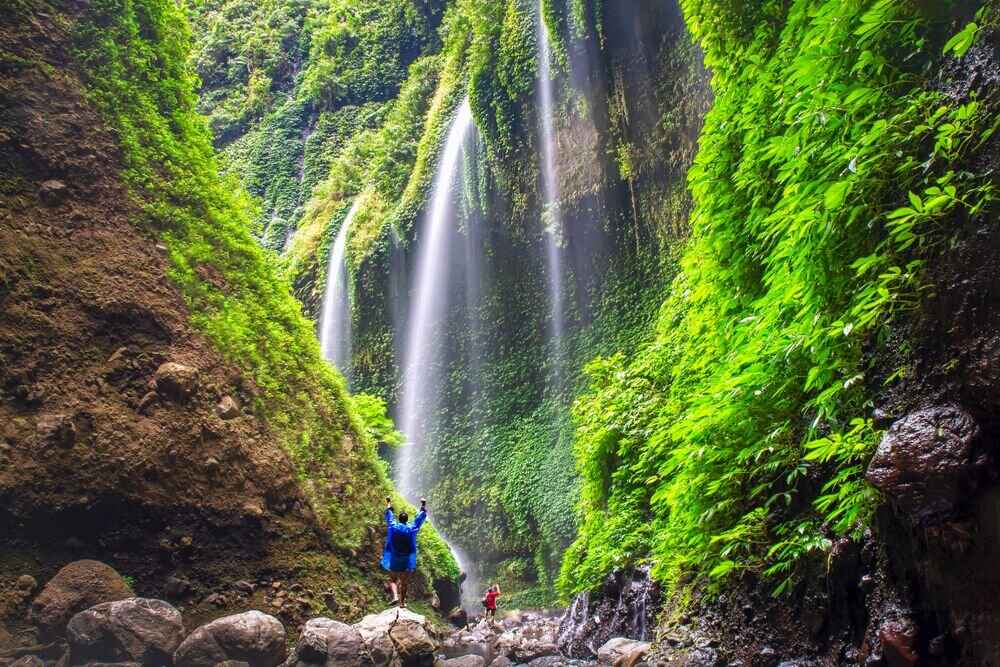
Madakaripura is one of East Java’s most dramatic waterfalls, plunging from a narrow cleft into a deep, fern-lined gorge and surrounded by towering basalt cliffs.
The path to the falls involves a scenic walk up a rocky stream bed, crossing stepping stones and shallow pools while being enveloped by verdant vegetation and constant mist.
As you approach, the sound of roaring water grows until the full spectacle unfolds: a tall, veiled torrent that drops in multiple threads, throwing up fine spray that creates atmospheric rainbows on sunny days.
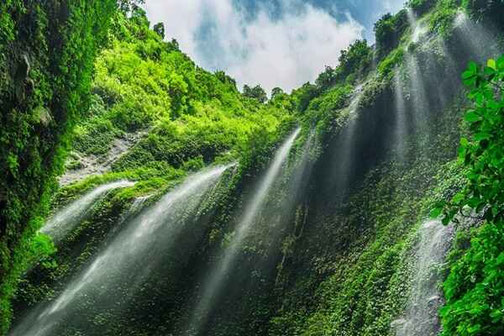

Local legends connect Madakaripura with the ancient story of Gajah Mada, giving the site a cultural layer in addition to its natural grandeur.
The waterfall’s vertical scale and the close proximity of towering rock walls create a dramatic, cinematic atmosphere that rewards visitors ready for a short but exhilarating walk.
Because the trail traverses wet, sometimes slippery terrain, sturdy footwear is recommended, but the physical effort is modest compared with the visual payoff.
Madakaripura remains a must-see for photographers, nature lovers, and anyone who appreciates the theatrical side of Indonesia’s waterfall repertoire.
Banyuwangi Mangrove Trails
Coastal Forests & Eco Walks
Banyuwangi’s mangrove ecosystems form an important buffer between land and sea, and in recent years several scenic mangrove trails have been developed to protect these areas while making them accessible to visitors.
Elevated wooden walkways lead through quiet corridors of tangled roots, salt-tolerant trees, and brackish water channels where small fish, crabs, and wading birds thrive.
The soft sounds of the estuary — lapping water, rustling leaves, and the occasional call of a heron — create a peaceful atmosphere far removed from the busier tourist routes.

Some sections of the mangrove zone include educational signage explaining the ecological value of mangroves, particularly their role in stabilizing coastlines and supporting marine biodiversity.
Viewing platforms offer panoramic looks over the forest canopy and out toward the open sea, making them ideal for sunrise or late-afternoon photography.
Several local communities help maintain the boardwalks, offering simple snacks, coconut drinks, and small boat rentals for short rides through the waterways.
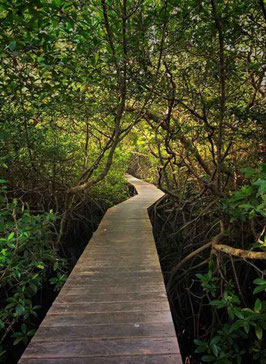
What makes the Banyuwangi mangrove trails especially appealing is the balance between nature and community involvement.
Visitors can appreciate an often-overlooked coastal ecosystem, support local conservation efforts, and enjoy a calm, scenic environment that feels worlds away from Java’s busy cities.
For travelers heading toward Ijen or the eastern coast, the mangrove forests provide a refreshing and educational stop.


Have more tips or suggestions?
Let us know in the comments below and help other visitors discover even more great places and experiences.