
Sunan Kalijaga
The Mystical Saint
Long before Java became predominantly Islamic, the island was shaped by Hindu-Buddhist beliefs, ancestral worship, and deep spiritual traditions rooted in the land itself. It was during this period of transition that Sunan Kalijaga emerged — not as a conqueror of faith, but as a bridge between worlds.
He was born as Raden Said, the son of a noble official in Central Java. Despite his privileged upbringing, he became deeply troubled by the injustice he witnessed around him. The poor suffered while elites lived in excess, and religious teachings felt distant from the realities of everyday life.
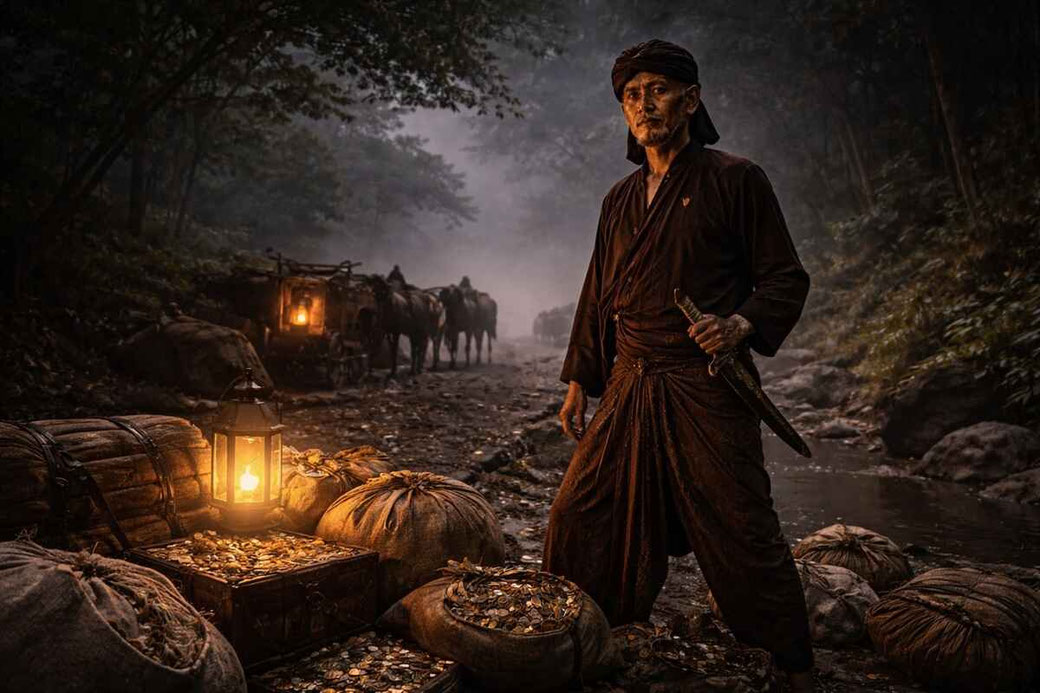
Disillusioned, Raden Said abandoned his noble life and turned to rebellion. He became known as a robber who targeted wealthy traders, redistributing stolen goods to the poor. Yet even in lawlessness, his actions were driven by moral outrage rather than greed.
His life changed when he encountered Sunan Bonang, one of the respected Islamic saints known as the Wali Songo. In some versions of the story, Bonang calmly confronted Raden Said and challenged his understanding of justice, faith, and patience. In others, he gave him a simple task: to guard a staff by the river and not move until instructed.
Raden Said waited.

Hours passed. Days passed. Seasons changed. He remained by the river, meditating, reflecting, and slowly shedding his anger. When Sunan Bonang finally returned, he recognized that Raden Said had undergone a profound transformation. He gave him a new name: Kalijaga, “the one who guards the river.”
From that moment on, Sunan Kalijaga followed a different path. Unlike other saints who taught through formal sermons, he spoke the language of the people. He used wayang shadow puppetry, traditional music, poetry, and symbolism to convey spiritual teachings. Rather than rejecting local beliefs, he reinterpreted them.
Ancient stories were given new meanings. Hindu epics became vessels for moral lessons aligned with Islamic values. Sacred trees, rivers, and mountains were not condemned, but respected as symbols of creation. Through this approach, Sunan Kalijaga made faith accessible without tearing society apart.
He dressed simply, lived among common people, and rejected rigid displays of authority. Many legends describe him wandering villages at night, offering quiet advice or testing people’s humility. Some say he possessed supernatural insight; others believe his true power lay in deep empathy.
Sunan Kalijaga is also credited with influencing Javanese architecture, rituals, and even clothing. He encouraged modest dress that retained traditional form, and promoted communal harmony over religious division. His teachings helped shape a uniquely Javanese expression of Islam that valued inner devotion above outward appearance.
Unlike many historical figures, Sunan Kalijaga did not seek recognition. His legacy survived not through monuments, but through culture itself — songs still sung, performances still staged, values still practiced.
Even today, he is remembered as the saint who understood that lasting change comes not from force, but from patience, wisdom, and respect for the soul of a people.
additional information (Factual Background)
Historical Background
Sunan Kalijaga lived during the late 15th and early 16th centuries, a period of major religious and cultural transformation in Java. He is one of the Wali Songo, the nine saints traditionally credited with the spread of Islam across the island.
Cultural Approach
What sets Sunan Kalijaga apart is his method. Rather than replacing Javanese traditions, he integrated spiritual teachings into existing cultural forms. This approach allowed Islam to take root without violent conflict or cultural erasure.
Mysticism and Symbolism
Many stories portray Sunan Kalijaga as a mystic who valued inner understanding over rigid doctrine. His legends blur the line between historical figure and spiritual archetype, reflecting Java’s long tradition of syncretic belief.
Relevance for Other Central Java Legends
Sunan Kalijaga connects naturally to:
- The rise of the Mataram worldview
- Sacred landscapes and symbolism
- Wayang and ritual performance
- The blending of old and new spiritual systems
Regional Variations Across Java
Sunan Kalijaga appears in stories throughout Central and East Java. While Central Javanese traditions emphasize his mystical wisdom and cultural role, other regions highlight different aspects of his life, reflecting how spiritual figures adapt to local values and needs.
