
The Cry of Si Oyon
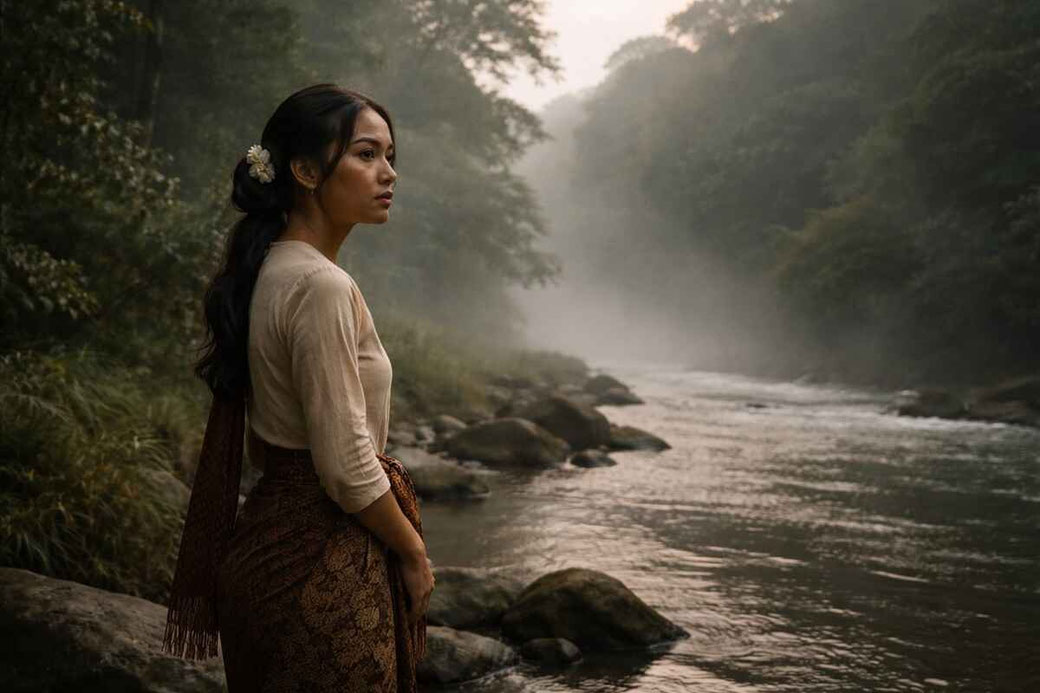
Long ago, in a quiet Sundanese village surrounded by forests and rivers, lived a young woman named Si Oyon. She was known for her gentle nature and unwavering loyalty, yet beneath her calm presence lay a deep emotional strength shaped by hardship.
Si Oyon was deeply devoted to her husband, a farmer who worked the land tirelessly. Life was modest, but their bond gave meaning to each day. However, fate slowly began to test her endurance.
Her husband grew distant. Influenced by ambition and outside voices, he became dissatisfied with their simple life. When opportunity arose elsewhere, he left the village, promising to return. Days turned into months, and his promises faded into silence.
Left alone, Si Oyon waited. Each morning she stood near the river, listening for footsteps, scanning the path that led back to the village. Hope sustained her at first, but doubt slowly took root.
As gossip spread, villagers whispered that her husband had taken another wife. The truth was never confirmed, yet the uncertainty weighed heavily on her heart. Si Oyon withdrew, speaking less, wandering more, her presence becoming ghost-like.
One evening, overwhelmed by grief, she walked into the forest calling out his name. Her voice echoed across the land, raw with longing and sorrow. She cried until her strength gave out, collapsing near a ravine where her voice carried endlessly.

By morning, Si Oyon was gone.
Villagers searched but found only silence. Yet at dusk, her cries could still be heard — drifting through valleys, echoing along rivers, calling out in despair. The place where her voice lingered became known as Si Oyon, forever marked by her sorrow.
The legend teaches that abandonment wounds not only the heart, but the land itself. Si Oyon’s cry became a warning against broken promises and emotional neglect.
To this day, locals say the sound of wind through trees or water flowing at night carries her voice — reminding listeners that love demands responsibility, and silence can destroy as deeply as cruelty.
additional information (Factual Background)
A Legend Rooted in Loss
The legend of Si Oyon originates from rural West Java and belongs to a group of Sundanese folktales centered on grief, waiting, and the emotional consequences of separation. Unlike legends involving gods or kings, this story focuses on an ordinary woman whose sorrow becomes woven into the landscape itself.
Oral Tradition and Local Memory
The story has been preserved through oral tradition, often told in villages near rivers and forested paths. These locations are essential to the legend, as the sound associated with Si Oyon’s cries is said to echo near waterways or quiet natural corridors, especially at dusk or during moments of stillness.
A Human-Centered Myth
Si Oyon is not punished by the gods, nor transformed by magic. Instead, her fate reflects the vulnerability of human emotion. Her story explains how grief, when unresolved, can linger and manifest beyond the individual, becoming part of collective memory.
Symbolism & Meaning / The Cry as Memory
Si Oyon’s cry symbolizes remembrance rather than fear. It is not meant to terrify, but to remind listeners of loss, longing, and unfinished farewells. The sound represents a bond that was never properly severed.
The River as Passage
Rivers in Sundanese belief often symbolize transition — between life stages, between presence and absence. Si Oyon waiting by the river reinforces the idea that she exists between certainty and uncertainty, hope and despair.
Waiting Without Resolution
Unlike many legends that conclude with transformation or closure, this story remains open-ended. Si Oyon waits not because she believes her husband will return, but because she cannot stop waiting. This unresolved state is the heart of the legend.
Regional Identity (West Java / Sunda) / Emotional Restraint and Quiet Tragedy
Sundanese folklore often expresses tragedy through subtlety rather than spectacle. The Cry of Si Oyon fits this pattern perfectly: sorrow is internalized, expressed through sound and silence rather than action.
Contrast with Other Regions
- West Java (Sunda): emotional memory, quiet sorrow, natural echoes
- Central Java: moral justice and cosmic order
- East Java: dramatic transformation and heroic consequence
Si Oyon’s story stands out for its restraint and emotional intimacy.
Variations of the Legend / Identity of Si Oyon
In some tellings, Si Oyon is a young wife; in others, a woman awaiting her lover or husband. The absence of precise identity allows the legend to resonate across generations.
Nature’s Response
Some versions claim that her cries are carried by the wind or reflected by riverbanks, while others suggest the sound only appears to those who are already burdened by loss. These variations reinforce the personal nature of the experience.
Cultural Legacy Today
The Cry of Si Oyon remains one of West Java’s most haunting legends. While few claim to hear the cry today, the story continues to be told as a reminder of loyalty, grief, and the emotional cost of uncertainty. Rather than a ghost story, it survives as a quiet reflection on human endurance and remembrance.
