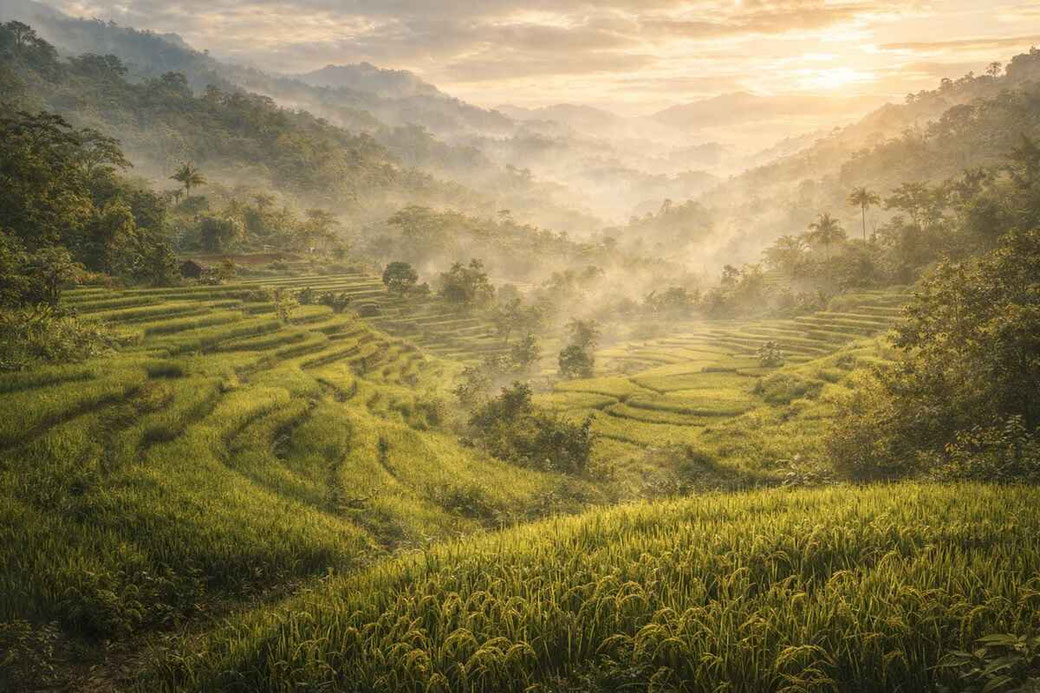
Nyi Pohaci Sanghyang Asri
The Rice Goddess

Long before humans cultivated the land, the world was still fragile and unbalanced. The gods watched over the earth from the upper realms, knowing that without harmony between heaven and soil, life could not flourish. Among them was Nyi Pohaci Sanghyang Asri, a radiant divine maiden whose beauty reflected purity, balance, and creation itself.
Nyi Pohaci was born from the essence of the cosmos. Her presence brought calm wherever she walked, and even the gods admired her grace. Yet her beauty stirred jealousy among some celestial beings, for it was said that the world itself responded to her breath. Flowers bloomed where she stepped, and barren ground softened beneath her touch.
One day, Batara Guru, ruler of the heavens, sensed a disturbance. Certain gods feared that Nyi Pohaci’s growing influence could disrupt cosmic order. Though she had done no wrong, whispers of danger spread through the celestial realm. To prevent imbalance, the gods made a tragic decision — one that would forever shape the fate of humanity.
Nyi Pohaci was sent down to the mortal world, watched over by loyal guardians. But even there, envy followed her. Dark forces, fearful of her power, conspired to end her life. Despite the protection around her, she fell ill, her divine essence weakening as the earth itself trembled.
When Nyi Pohaci died, the heavens wept. The gods realized too late that her death would not restore balance — instead, it would leave the world empty and lifeless. In sorrow, they buried her body with great reverence, praying that her spirit would not fade completely.
From her grave, miracles began to emerge.
From her head grew the coconut tree.
From her eyes sprang grains of rice.
From her hands and arms came bananas and root vegetables.
From her feet grew tubers and medicinal plants.
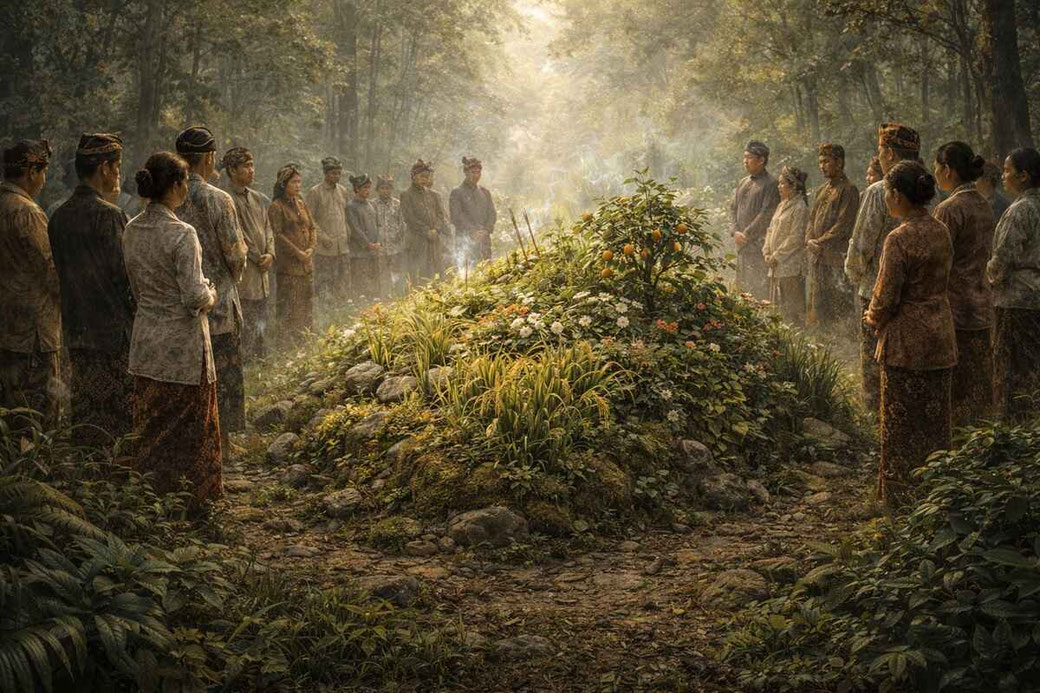
Where once the land was barren, fields of rice now swayed in the wind. Humanity discovered that the grains born from Nyi Pohaci’s body could sustain life. Rice became sacred — not merely food, but a divine gift.
The people of West Java learned to treat rice with reverence. Before planting, they prayed to Nyi Pohaci. Before harvesting, they thanked her spirit. Rice barns were built as sacred spaces, and grains were never wasted. To drop rice on the ground was to disrespect the goddess herself.
In Sundanese villages, her presence lived on through rituals and ceremonies. Women sang traditional chants while planting seedlings, believing Nyi Pohaci listened. Farmers timed their work according to natural cycles, honoring the balance she represented.
Over time, Nyi Pohaci became closely associated with Dewi Sri, another rice goddess known throughout Java and Bali. Yet in West Java, Nyi Pohaci Sanghyang Asri remained distinct — more ancient, more directly tied to the land and ancestral belief systems.
Her story teaches that life arises from sacrifice, that prosperity depends on respect for nature, and that harmony between humans and the earth must be maintained. Even today, the spirit of Nyi Pohaci is said to dwell in every rice field, watching over the crops that feed the island.
additional information (Factual Background)
Ancient Sundanese Belief
Nyi Pohaci Sanghyang Asri is one of the oldest and most sacred figures in Sundanese mythology. Long before organized kingdoms or formal religions, she embodied the life-giving force of agriculture and fertility in West Java. Her legend reflects a worldview in which nature, humanity, and the spiritual realm are inseparable.
Goddess of Rice and Life
Rice is not merely food in Sundanese culture; it is the foundation of life, community, and survival. Nyi Pohaci personifies rice itself — its growth, abundance, and fragility. Her presence explains not only how rice came into existence, but why it must be treated with reverence.
Mythic Death and Renewal
Central to her story is the idea that life emerges from sacrifice. After her death, plants, fruits, and most importantly rice grow from her body. This theme of transformation through sacrifice mirrors agricultural cycles of planting, decay, and rebirth.
Symbolism & Meaning / Rice as Sacred Essence
Rice is considered a living entity endowed with spirit (jiwa). Nyi Pohaci is not merely associated with rice — she is rice in spiritual form. This belief explains why rice cultivation is surrounded by rituals, taboos, and ceremonies.
Female Principle and Fertility
Nyi Pohaci represents the nurturing feminine principle. Her role emphasizes care, patience, and balance rather than domination or power. Agriculture succeeds not through force, but through harmony with natural rhythms.
Death as Creation
Unlike heroic legends focused on victory, this myth teaches that creation often requires loss. Nyi Pohaci’s death is not tragic but transformative, reinforcing acceptance of natural cycles.
Regional Identity (West Java / Sunda) / Agricultural Worldview
West Java’s fertile highlands and terraced rice fields shaped a culture deeply dependent on agriculture. The reverence for Nyi Pohaci reflects a society attuned to seasonal cycles, rainfall, and soil fertility.
Contrast with Other Regions
- West Java (Sunda): rice goddess, fertility, nature worship
- Central Java: ritual kingship and cosmic balance
- East Java: power, ambition, transformation
Nyi Pohaci’s prominence highlights West Java’s agricultural identity over court-centered mythology.
Variations of the Legend / Names and Titles
Nyi Pohaci is also known as Dewi Sri in broader Javanese tradition. In Sundanese belief, however, her identity remains distinct, emphasizing her primordial and local character.
Creation Details
Different versions describe varying plants emerging from her body, but rice is always the most sacred result. Some versions include detailed instructions on proper agricultural rituals passed down from the gods.
Cultural Legacy Today
Nyi Pohaci Sanghyang Asri remains deeply embedded in Sundanese culture. Agricultural rituals, rice harvest ceremonies, and traditional beliefs still honor her spirit. Even today, rice is treated with respect in Sundanese households, reflecting the enduring belief that it carries the essence of the goddess herself.