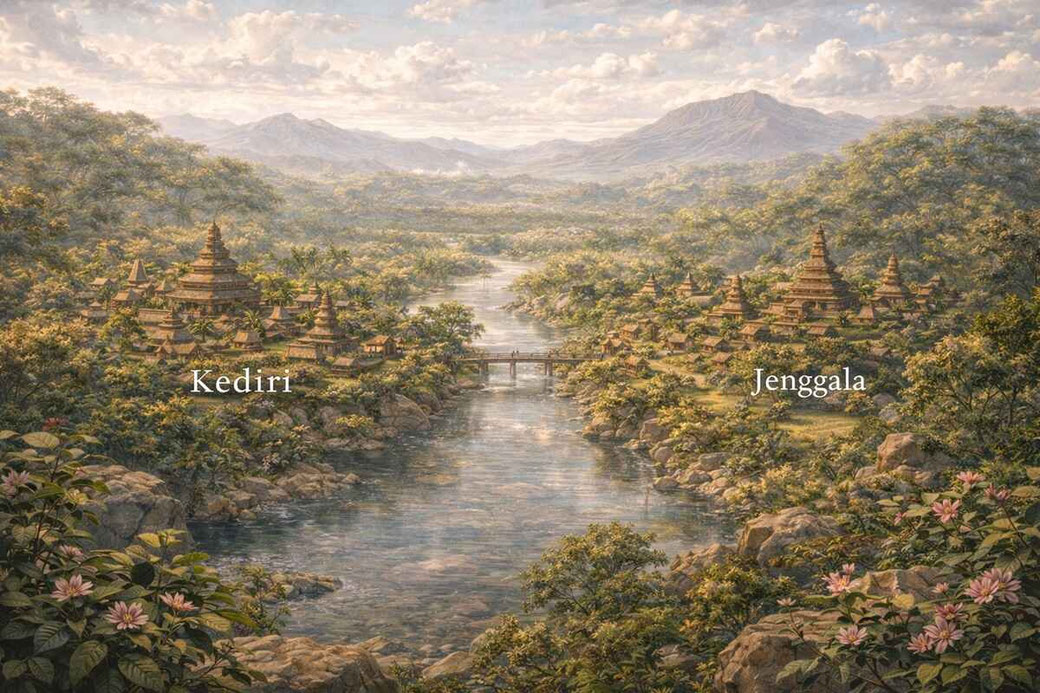
Jenggala and the Split of the Realm
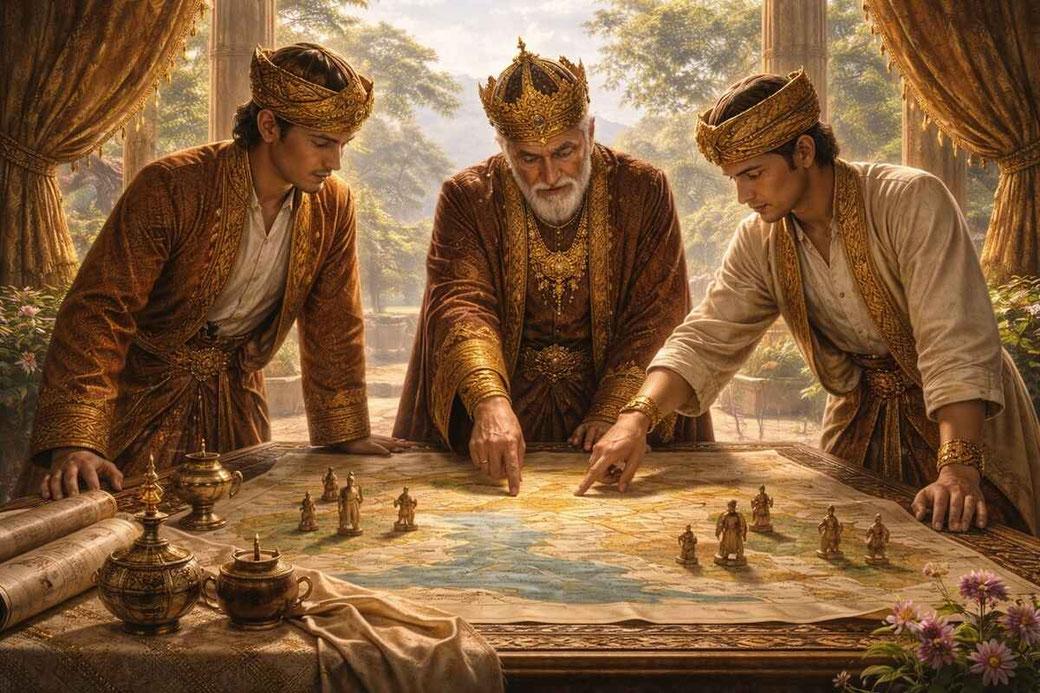
In ancient East Java, a powerful king ruled over a vast and prosperous realm. His lands stretched across fertile plains, river valleys, and thriving trade routes. Under his reign, peace and order were maintained — but the king carried a heavy concern for the future.
As his reign drew to an end, the king faced a dilemma shared by many rulers before him: succession.
He had two sons, both capable and ambitious. Rather than risk rivalry, rebellion, or civil war after his death, the king sought a solution that would preserve harmony within the realm.
After consulting sages and advisors, he made a historic decision.
The kingdom would be divided.

One part became the Kingdom of Jenggala, centered in the eastern regions. The other became the Kingdom of Kediri, ruling the western lands. Each son would govern his own kingdom, equal in status, bound by blood rather than rivalry.
To mark the division, sacred boundaries were drawn — rivers, forests, and mountains became symbolic borders. Rituals were performed to legitimize the separation, ensuring that the split was not seen as weakness, but as wisdom.
For a time, peace endured.
However, history would later show that even carefully planned divisions could not prevent future conflict forever. Rivalries eventually resurfaced, alliances shifted, and power once again changed hands. Yet the original act of division remained remarkable — a conscious attempt to place unity above dominance.
The legend of Jenggala is remembered not as a tale of failure, but as a lesson in restraint. It teaches that leadership is not always about expansion or conquest, but sometimes about knowing when to let go — for the greater good.
additional information (Factual Background)
Historical Roots
The division between Jenggala and Kediri is recorded in early Javanese sources and reflects real political fragmentation in East Java during the 11th century.
Wisdom Over Warfare
Unlike many legends focused on battle, this story emphasizes prevention — the avoidance of bloodshed through thoughtful governance.
Symbolic Geography
Rivers and natural features served not only as borders but as sacred markers, reinforcing the spiritual legitimacy of political decisions.
Influence on Later Kingdoms
The division laid groundwork for later East Javanese power structures, eventually leading toward Singhasari and Majapahit.
Regional Variations
Some versions portray the division as entirely peaceful, while others hint at tension beneath the surface. Across all tellings, the core message remains consistent: foresight is the highest form of leadership.