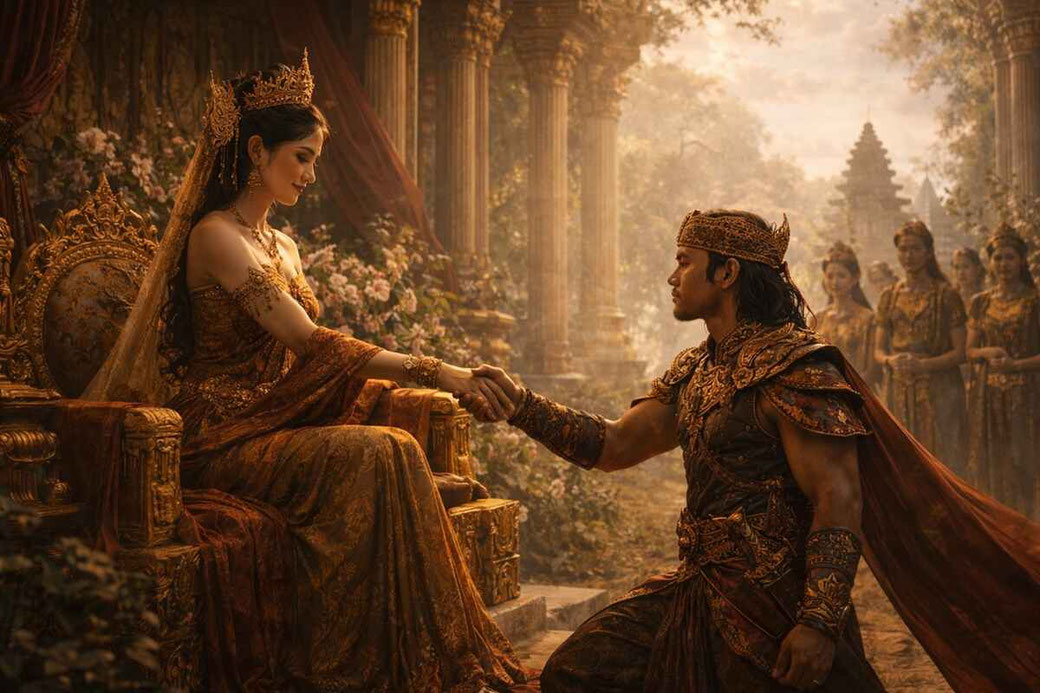
Damarwulan & Minakjingga
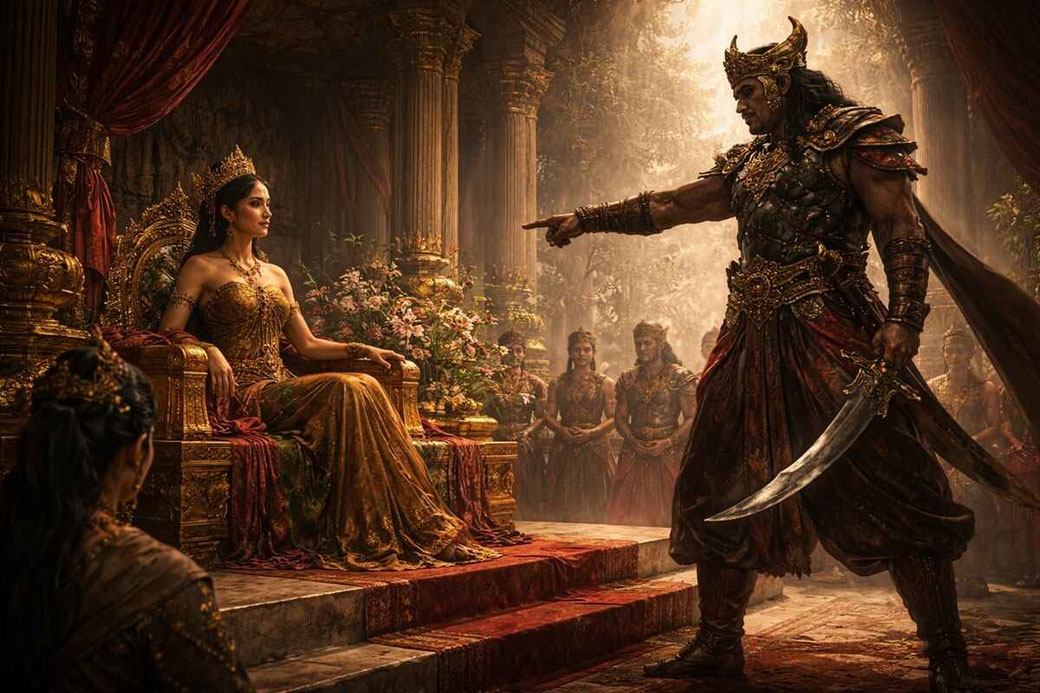
In the time of the Majapahit Kingdom, East Java was ruled by Queen Kencanawungu, a wise but cautious monarch. Beyond her realm lay the kingdom of Blambangan, ruled by the feared warrior king Minakjingga — a man of immense strength and ruthless ambition.
Minakjingga sought to dominate Majapahit and demanded Queen Kencanawungu’s submission. When she refused, he challenged her authority, threatening invasion. Knowing that few could match Minakjingga’s power, the queen called for a champion.
Many nobles came forward, boasting of courage and strength. Yet one man remained unnoticed: Damarwulan, a young servant of humble status, unaware of his noble origins. Raised in obscurity, Damarwulan possessed quiet strength, discipline, and integrity.
Encouraged by loyal attendants and guided by fate, Damarwulan accepted the challenge. Armed with the sacred gadha mace and protected by divine favor, he set out to confront Minakjingga.

The battle was fierce. Minakjingga’s brute force shook the battlefield, but Damarwulan fought with agility and resolve. In the end, righteousness prevailed. Minakjingga was defeated, and his reign of terror ended.
Victorious, Damarwulan returned to Majapahit. His true lineage was revealed, and Queen Kencanawungu recognized him not only as a hero, but as a rightful noble. She chose him as her consort, uniting strength with wisdom.
The legend of Damarwulan teaches that true power does not come from cruelty or dominance, but from courage guided by humility and justice. It remains one of East Java’s most beloved heroic tales, performed for centuries in dance, theater, and oral tradition.
additional information (Factual Background)
Majapahit and Blambangan
The story reflects historical tensions between Majapahit and Blambangan, dramatized through myth to express ideals of leadership and loyalty.
Damarwulan as the Ideal Hero
Unlike warriors driven by ambition, Damarwulan represents the Javanese ideal of the hidden hero — one whose virtue is revealed only through action.
Minakjingga as the Tyrant Archetype
Minakjingga embodies uncontrolled power and arrogance, serving as a moral counterpoint to Damarwulan’s restraint.
Cultural Legacy
The legend is central to East Javanese performance traditions, including wayang wong and classical dance dramas.
Regional Variations Across Java
In East Java, the story emphasizes Majapahit’s moral authority. In other regions, Minakjingga’s character may be exaggerated to highlight the contrast between tyranny and justice.