Ciung Wanara
The Prince of Galuh

Long ago, when the ancient Sundanese kingdoms ruled the fertile lands of West Java, the Kingdom of Galuh thrived along peaceful rivers and green rice fields. Its people were prosperous, its culture rich, and its palace known for wisdom. Yet beneath that calm surface, ambition was stirring — ambition that would shape the destiny of a child born to restore balance.
The story begins with King Permana Di Kusumah, a noble and respected ruler. Despite his wisdom, he faced a personal sorrow: he had no children. Wanting to ensure the kingdom’s future, he married two wives — the gentle Dewi Pangrenyep and the wise Dewi Naganingrum. Though both were loyal to the king, jealousy slowly began to grow between them.
One year, Dewi Naganingrum received a divine vision: she would soon conceive a child blessed by ancestral spirits, destined for greatness. When the king heard this, he was filled with joy and prepared ceremonies to honor the gods for the gift of an heir. But Dewi Pangrenyep’s heart tightened with envy. She feared the rise of her co-wife and the future prince that would overshadow any child she might bear.
Months passed, and as predicted, Dewi Naganingrum gave birth to a beautiful baby boy. The king named him Ciung Wanara, symbolizing a bright future. But on the night of his birth, Dewi Pangrenyep acted on her darkest intentions. With the help of a palace advisor loyal to her, she replaced the newborn prince with a puppy and presented it to the king as Naganingrum’s “child.”
Shocked and humiliated, King Permana Di Kusumah believed he had been deceived. In anger and sorrow, he ordered Dewi Naganingrum to be imprisoned. Meanwhile, Pangrenyep and her advisor secretly placed the true infant prince into a basket and set it afloat on the Ciwulan River, hoping he would be lost forever.
But fate protects those born with destiny. The basket drifted gently down the river until it reached a humble couple, Ki Arga Plara and his wife, who lived by the water’s edge. Seeing the abandoned infant, they felt a surge of compassion and decided to raise him as their own. They named him simply “Wanara,” unaware of his true lineage.
The boy grew strong, intelligent, and kindhearted. He had an unusual gift: animals, especially birds, would gather around him as if sensing his noble spirit. Among them was the ciung — a type of bird after which he had once been named. His foster parents noticed the signs but said nothing, choosing only to nurture the good within him.
Years later, when Wanara reached adulthood, he learned from village elders that the Kingdom of Galuh had fallen into discord. Dewi Pangrenyep’s son, Hariang Banga, had grown up arrogant and cruel, favored by court officials but feared by the people. Rumors swirled about an imprisoned queen and the mysterious disappearance of the true heir.
Wanara felt a pull in his heart — a calling he could not ignore.
He traveled to Galuh to compete in a series of royal contests designed to choose the next crown prince. These competitions tested strength, intelligence, and virtue. Many nobles arrived boasting of their abilities, but Wanara quietly joined them, guided only by instinct.
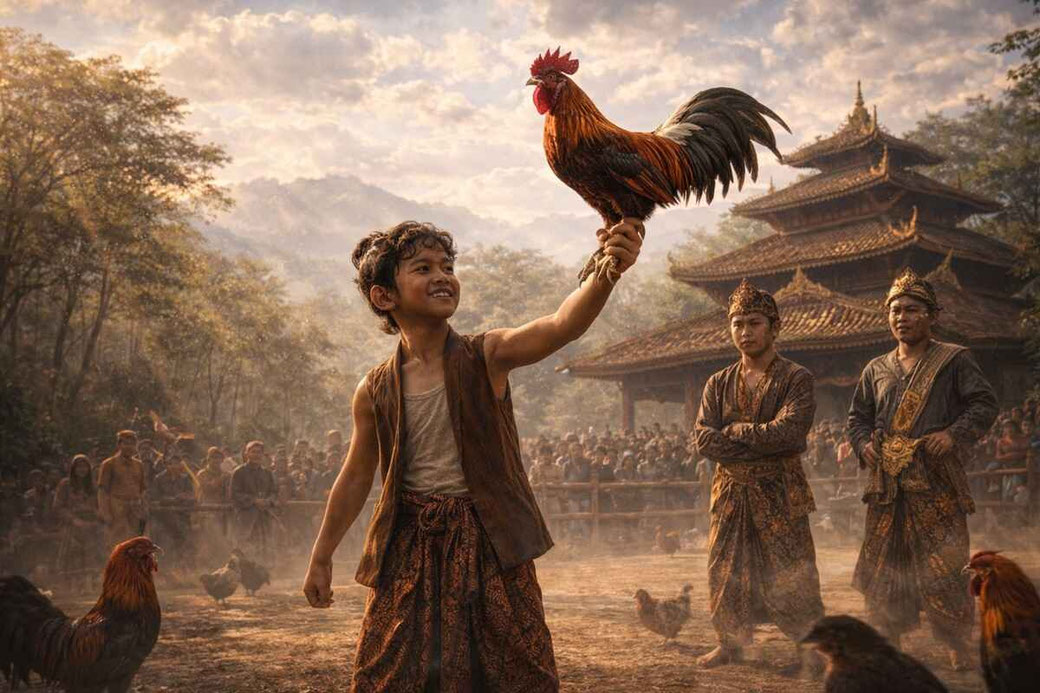
One of the trials required contestants to tame a sacred rooster known to defeat every challenger. Wanara, who had grown up surrounded by animals, managed the task with ease — not through force, but through empathy. The rooster became calm at his touch. The crowd murmured, sensing something special about this young man.
The final contest was a cockfight, as was Sundanese royal tradition. Wanara’s rooster was small and ordinary-looking, while Prince Hariang Banga’s animal was large and intimidating. But the court elders insisted on fairness.
Against all expectations, Wanara’s rooster fought with remarkable determination. Blow after blow, it stood its ground until it finally defeated Hariang Banga’s champion. The palace courtyard erupted in shock. Hariang Banga grew furious, accusing Wanara of trickery, but the council declared Wanara the winner.
It was at this moment that Dewi Naganingrum, still imprisoned in a hidden corner of the palace, heard the name “Wanara.” Hope stirred in her heart. She asked the guard to bring her a glimpse of the young man. When she saw him, she recognized his features — the same gaze as the king, the same shape of face she had held the night he was born.
The truth spread quickly.
Overwhelmed with guilt, King Permana Di Kusumah demanded an explanation from Dewi Pangrenyep. Faced with the evidence, she confessed her deception. The king ordered her to be exiled from the palace. Dewi Naganingrum was restored to her rightful place, her dignity finally returned.
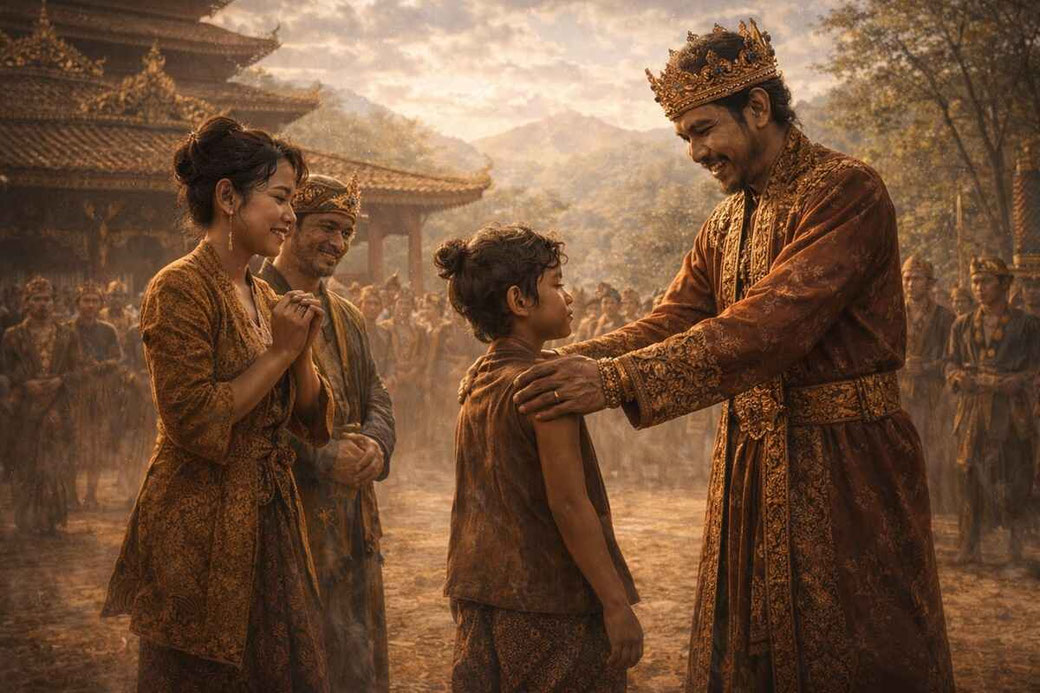
As for Wanara, the king embraced him tearfully, recognizing the son he had long believed lost. The kingdom celebrated for days with dances, offerings, and processions. Ciung Wanara was officially proclaimed the crown prince, destined to lead Galuh into a new era of justice and prosperity.
Yet despite reclaiming his birthright, Ciung Wanara did not forget the couple who raised him. He brought Ki Arga Plara and his wife to the palace, honoring them as his second parents. They lived the rest of their lives in comfort and respect.
Ciung Wanara went on to become a wise ruler, uniting warring factions and setting the foundation for what would later become the powerful Sundanese realm. His story remains one of resilience, destiny, and the triumph of justice over jealousy.
additional information (Factual Background)
Sundanese Royal Origins
The legend of Ciung Wanara originates from the ancient Kingdom of Galuh, one of the earliest Sundanese kingdoms in West Java. Unlike later Javanese court legends centered on Majapahit or Mataram, this story reflects a formative period of Sundanese political identity.
Myth and Early Kingship
Ciung Wanara’s tale blends myth and proto-history, presenting an origin story for dynastic legitimacy. The legend explains how rightful rule is restored not through conquest, but through lineage, destiny, and moral superiority.
Oral Tradition and Court Memory
The story was preserved primarily through oral storytelling, court recitations, and later literary adaptations. As a result, historical fact and symbolic narrative are deliberately intertwined.
Symbolism & Meaning / The Egg as Destiny
Ciung Wanara’s miraculous birth from an egg symbolizes divine selection and predestined leadership. In Sundanese belief, extraordinary origins often mark individuals chosen to restore balance.
The Cockfight
The cockfight is not merely entertainment but a ritualized test of fate and legitimacy. Victory in the arena reflects cosmic approval rather than brute force.
Brothers Divided
The conflict between Ciung Wanara and his half-brother represents internal division within a kingdom. The resolution through peaceful division, rather than revenge, highlights Sundanese ideals of restraint and harmony.
Regional Identity (West Java / Sunda) / Sundanese Values
This legend emphasizes qualities highly valued in Sundanese culture:
- fairness
- emotional restraint
- respect for kinship
- avoidance of unnecessary bloodshed
Victory is achieved through intelligence and destiny, not domination.
Contrast with Central & East Java
- West Java (Sunda): legitimacy, moral authority, peaceful resolution
- Central Java: cosmic balance and ritual kingship
- East Java: ambition, power struggles, transformation
Ciung Wanara is remembered not as a conqueror, but as a restorer.
Variations of the Legend / Role of the Queen
In some versions, Ciung Wanara’s mother actively engineers his survival; in others, fate alone guides his path. These variations reflect differing views on maternal agency and destiny.
Ending of the Conflict
Some tellings emphasize reconciliation, while others focus on territorial division between Galuh and its neighboring realms. Across all versions, vengeance is deliberately avoided.
Cultural Legacy Today
The legend of Ciung Wanara remains central to Sundanese historical identity. It is taught in West Java as both a moral tale and a symbolic explanation of early political structures. The story reinforces the belief that rightful leadership emerges through integrity rather than violence.