
Calon Arang
The Sorceress of Girah
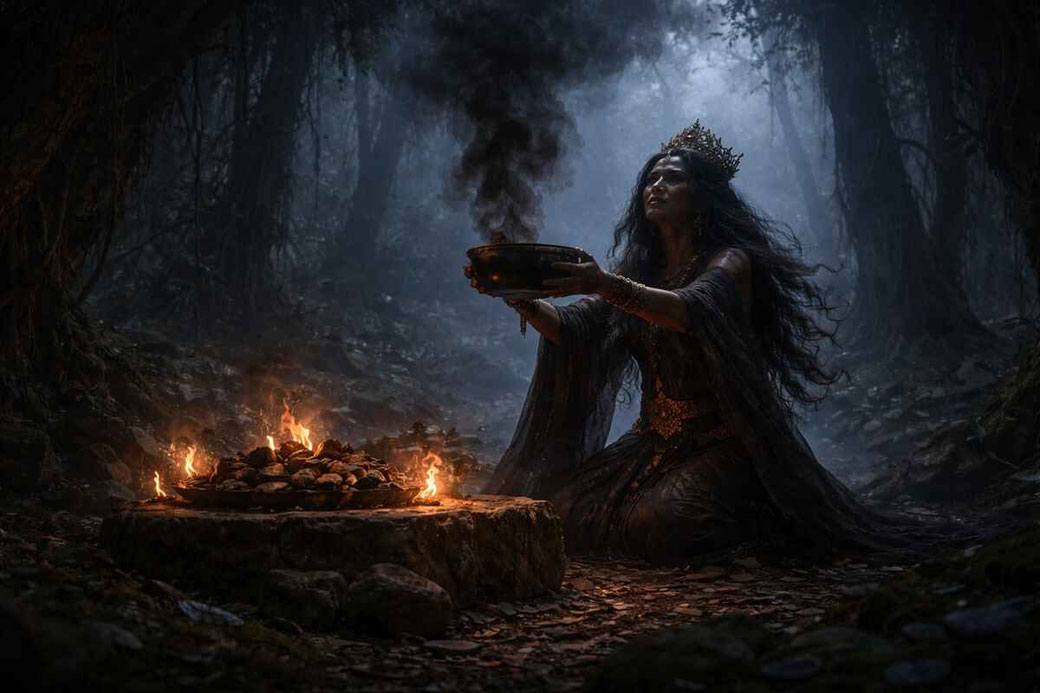
In the ancient kingdom of Girah, East Java, fear once ruled the land. Crops failed, disease spread, and death followed without warning. The people whispered one name in terror: Calon Arang.
Calon Arang was a widow of immense spiritual power. Skilled in black magic and forbidden rituals, she lived apart from society, accompanied only by her daughter, Ratna Manggali. Though feared, Calon Arang was not born evil — her descent began with isolation and rejection.
Her daughter, despite her beauty and grace, remained unmarried. No man dared approach her, for all knew she was the daughter of Calon Arang. The rejection humiliated the sorceress deeply, and her grief turned into rage.
Consumed by anger, Calon Arang performed dark rituals in graveyards and forests, calling upon destructive forces. Plagues struck Girah. Rivers ran foul. Villages emptied as people fled in fear. The kingdom descended into chaos.
The king of Girah, powerless against her magic, sought help from the wise priest Mpu Bharadah, a master of spiritual balance rather than domination. Understanding that brute force would fail, Bharadah devised a subtler plan.
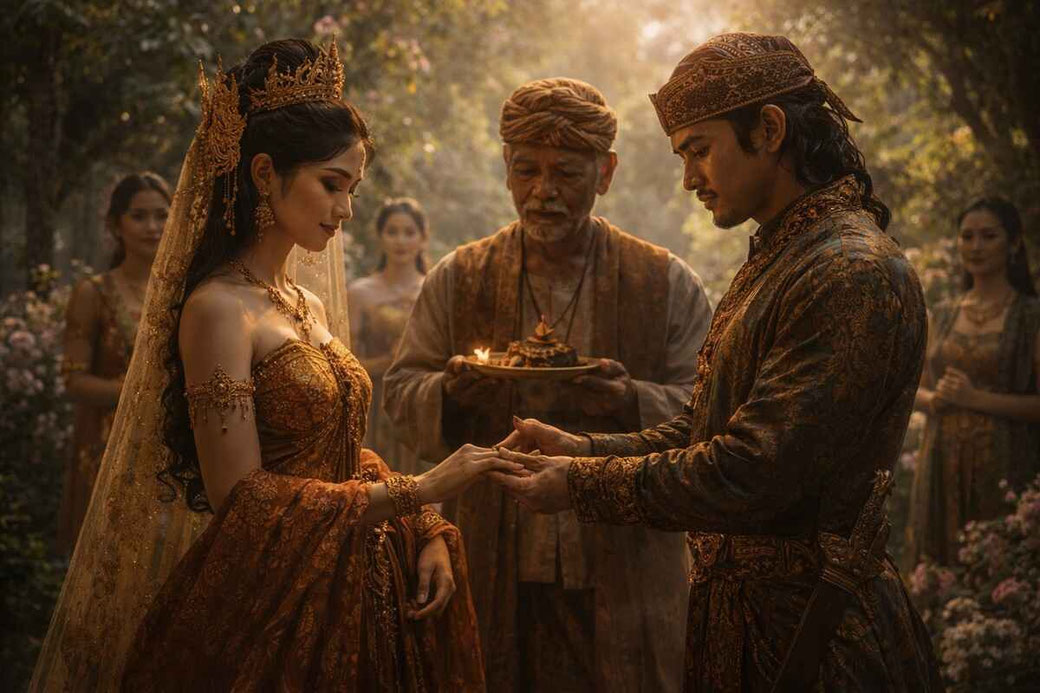
He sent his disciple, Mpu Bahula, to marry Ratna Manggali. Through this union, Bharadah gained access to Calon Arang’s sacred texts — the source of her power. When the sorceress discovered the betrayal, her fury erupted in a final confrontation.
In a spiritual battle between chaos and balance, Bharadah confronted Calon Arang. Her magic proved formidable, but unrestrained power ultimately led to her downfall. Defeated, Calon Arang was stripped of her power, and peace returned to Girah.
Some versions say she died unredeemed. Others claim that in her final moments, Bharadah offered purification, allowing her soul to find release. In either telling, her story became a warning — not against power itself, but against power driven by resentment.
Calon Arang’s legend remains one of Java’s darkest, reminding listeners that spiritual force without compassion leads only to destruction.
additional information (Factual Background)
East Javanese Origins
The Calon Arang legend originates in East Java and appears in ancient Javanese texts such as the Calon Arang manuscript. The story later traveled to Bali, where it evolved into ritual performance and dance.
Differences from the Balinese Version
In Java, Calon Arang is portrayed less as a ritual demon figure and more as a tragic human whose power becomes destructive through isolation and rage.
Spiritual Dualism
The conflict between Calon Arang and Mpu Bharadah represents the Javanese belief in balance — destructive forces exist, but must be restrained through wisdom, not violence.
Girah and Sacred Geography
Although Girah’s exact location is debated, it is generally associated with East Java’s historical heartlands, reinforcing the region’s deep connection to early spiritual and political power.
Regional Variations Across Java & Bali
While East Java emphasizes moral balance and tragedy, Bali transformed the legend into a living ritual tradition. The core story remains the same, but its meaning adapts to local spiritual frameworks.
